
Perth Translation Services » Perth » City of Belmont Translation Services » City of Belmont Hindi Translation Service
City of Belmont Hindi Translation Services
 Get fast and professional translation services in City of Belmont. We have NAATI certified Hindi translators providing translation of all types of documents. These include confidential legal, financial and migration document translations.
Legal Contract Translation City of Belmont
Medical Translation City of Belmont
Get A Quick Quote
City of Belmont
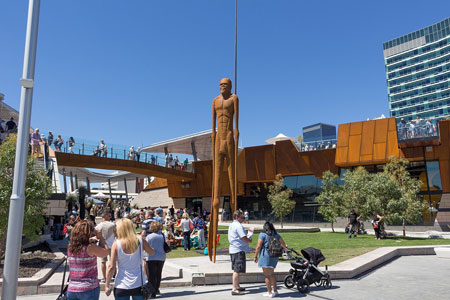
The City of Belmont is a local government area in the inner eastern suburbs of the Western Australian capital city of Perth, located about 8 kilometres (5 mi) east of Perth's central business district on the south bank of the Swan River. The City covers an area of 39.8 square kilometres (15.4 sq mi), maintains 225 km of roads and had a population of almost 40,000 as at the 2016 Census. The City of Belmont is a member of the Eastern Metropolitan Regional Council
City of Belmont History
The Belmont Road District was created on 2 December 1898. On 4 October 1907, it was renamed Belmont Park. From 1906 until 1909, Burswood Island was part of the district.
On 1 July 1961, the Belmont Park Road District became the Shire of Belmont following the enactment of the Local Government Act 1960. On 17 February 1979 it attained city status.
City of Belmont Suburbs
Ascot, Belmont, Cloverdale, Kewdale, Perth Airport, Redcliffe, RivervaleAbout the Hindi Language
Hindi is the most commonly spoken language in India. It is the fifth most spoken language in the world with about 182 million native speakers in 1998. The Devanāgarī script is used to write Hindi.
Hindi is widely written, spoken and understood in North India and some other places in India. In 1997, a survey found that 45% of Indians can speak Hindi.
Like other Indo-Aryan languages, Hindi is a direct descendant of an early form of Vedic Sanskrit, through Sauraseni Prakrit and Śauraseni Apabhraṃśa (from Sanskrit apabhraṃśa "corrupted"), which emerged in the 7th century CE.
Before the standardization of Hindi on the Khariboli dialect, various dialects and languages of the Hindi belt attained prominence through literary standardization, such as Avadhi and Braj Bhasha. Early Hindi literature came about in the 12th and 13th centuries CE. This body of work included the early Rajasthani epics such as renditions of the Dhola Maru, the Prithviraj Raso in Braj Bhasha, and the works of Amir Khusrow in the Khariboli of Delhi.
Modern Standard Hindi is based on the Khariboli dialect, the vernacular of Delhi and the surrounding region, which came to replace earlier prestige dialects such as Awadhi, Maithili (sometimes regarded as separate from the Hindi dialect continuum) and Braj. Urdu – another form of Hindustani – acquired linguistic prestige in the later Mughal period (1800s), and underwent significant Persian influence. Modern Hindi and its literary tradition evolved towards the end of the 18th century. In the late 19th century, a movement to further develop Hindi as a standardised form of Hindustani separate from Urdu took form. In 1881, Bihar accepted Hindi as its sole official language, replacing Urdu, and thus became the first state of India to adopt Hindi. Modern Standard Hindi is one of the youngest Indian languages in this regard.
City of Belmont Hindi Translator Services
Hindi translator for certified translation services:
- Hindi driving license translation
- Hindi financial translation and bank statement translations
- Hindi birth certificate translation
- Hindi marriage certificate translation
- Hindi name-change certificate translation
- Hindi degree translation
- Hindi diploma translation
- Hindi school transcript translation
- Hindi passport translation
- Hindi police report translation
- Hindi police check translation
- Hindi personal letters and cards
- Hindi utility bill translations
- Hindi death certificate translation
Perth Translation provides fast and affordable Hindi translation services in the City of Belmont for all types of personal documents by NAATI translators.
Hindi Document Translation
Standard Hindi (Modern Standard Hindi based on the Khariboli dialect) is used in official documents across India's Hindi-speaking belt, though regional vocabulary differences exist between states like Uttar Pradesh, Madhya Pradesh, Rajasthan, and Bihar. The most significant translation challenge is the Hindi-Urdu continuum: documents from before Indian independence may use a more Persianised register, while contemporary official Hindi uses heavily Sanskritised vocabulary. Documents from different Indian states may also be bilingual in Hindi and the relevant state language.
Hindi Document Types
Hindi civil documents include the janma praman patra (birth certificate), vivah praman patra (marriage certificate), and chalak anugya patra (driving licence). Educational documents from Hindi-medium institutions bear the heading ank talika (mark sheet) or praman patra (certificate). The Aadhaar card (aadhaar patra) is India's biometric identity document.
Where Hindi Is Official
Hindi is one of two official languages of the Indian Union government (alongside English) and is the official language of numerous Indian states and union territories. It is also an official language of Fiji (as Fiji Hindi, a distinct variety). With over 600 million speakers including second-language users, Hindi-language documents originate from one of the world's largest and most complex bureaucratic systems, spanning central government, state governments, and municipal authorities each with their own document formats and conventions.
Hindi is written in the Devanagari script, which includes a characteristic top line (shirorekha) connecting letters within words. The IAST (International Alphabet of Sanskrit Transliteration) and Hunterian systems are the main academic and government romanisation standards. Indian passports use a simplified romanisation, and personal name spellings vary enormously — the same Hindi name may be romanised as Singh, Sinh, or Singha depending on family tradition and regional convention.
About City of Belmont
The City of Belmont occupies approximately 40 square kilometres on the southern bank of the Swan River, directly east of Perth CBD. With a population of around 43,000, it combines residential suburbs with significant commercial and industrial zones, and its proximity to Perth Airport shapes much of its economic activity.
Principal suburbs are Belmont, Rivervale, Kewdale, Cloverdale, and Redcliffe, with the Belmont Forum shopping centre serving as the main retail destination.
The City's administration centre is on Faulkner Street in Belmont, adjacent to the Ruth Faulkner Public Library. The Belmont Oasis leisure centre provides aquatic and fitness facilities, and community halls are spread across Rivervale and Cloverdale.
The area is well-connected via Leach Highway, Great Eastern Highway, and Tonkin Highway, with Perth Airport located within its boundaries. Transperth bus routes service the area extensively, and the Redcliffe train station on the Airport line opened in 2022.
