
Perth Translation Services » Perth » City of Gosnells Translation Services » City of Gosnells Italian Translation Service
City of Gosnells Italian Translation Services
 Get fast and professional translation services in City of Gosnells. We have NAATI certified Italian translators providing translation of all types of documents. These include confidential legal, financial and migration document translations.
Legal Contract Translation City of Gosnells
Medical Translation City of Gosnells
Get A Quick Quote
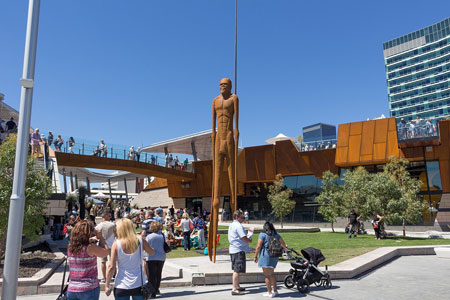
City of Gosnells
The City of Gosnells is a local government area in the southeastern suburbs of the Western Australian capital city of Perth, located northwest of Armadale and about 20 kilometres (12 mi) southeast of Perth's central business district. The City covers an area of 128 square kilometres (49.42 sq mi), much of which is state forest rising into the Darling Scarp to the east, and had a population of approximately 118,000 at the 2016 Census.
City of Gosnells History
The name Gosnells dates back to 1862 when Charles Gosnell who was the owner of London cosmetic company John Gosnell & Co., bought Canning location 16 from the Davis family who were the original grantees in 1829. While the purchase of the land was a personal investment by Charles Gosnell, when the land was sold to developers in 1903 the developers used the association to the well known cosmetic company, claiming it had bought the land because of its fertile soil to grow flowers for the manufacture of its perfume range. The abundance of the Arum Lily (Zantedeschia aethiopica) in the area and the marketing by the developers contributed to the myth about the Gosnell company, being so successful that the Gosnells railway station was constructed on the Armadale line in 1903.
Gosnells Road District was created out of the abolished Canning Road District on 1 July 1907. Industry in the form of brickworks were introduced to Beckenham in the early 1990s. Between 1912 and 1915 fruit fly wiped out nearly all of the stone fruit crops in the region and many farmers turned to dairying and market gardening. Irrigation was vital due to sandy, infertile soils of Canning Vale. In 1923, the City received land from Jandakot Road District when that entity was abolished. Significant development did not occur until the post-war years. The population grew from 7,400 in 1954 to about 11,000 in 1966, and then to 21,000 in 1970. On 1 July 1961, Gosnells Road District became a Shire following enactment of the Local Government Act 1960. On 1 July 1973 it became a Town and exactly four years later it attained City status.
City of Gosnells Suburbs
Beckenham, Canning Vale, Gosnells, Huntingdale, Kenwick, Langford, Maddington, Martin, Orange Grove, Southern River, ThornlieAbout the Italian Language
Italian is an official language in Italy, Switzerland, San Marino, Vatican City and western Istria (in Slovenia and Croatia). Italian is also spoken by large expatriate communities in the Americas and Australia. Italian is a major European language, being one of the official languages of the Organisation for Security and Cooperation in Europe and one of the working languages of the Council of Europe.
It is the third most widely spoken first language in the European Union with 69 million native speakers. Including Italian speakers in non-EU European countries (such as Switzerland and Albania) and on other continents, the total number of Italian speakers is around 90 million
Throughout Italy, regional variations of Standard Italian, called Regional Italian, are spoken. In Italy, almost all the other languages spoken as the vernacular — other than standard Italian and some languages spoken among immigrant communities — are often imprecisely called "Italian dialects", even though they are quite different, with some belonging to different linguistic branches. The only exceptions to this are twelve groups considered "historical language minorities", which are officially recognized as distinct minority languages by the law. On the other hand, Corsican (a language spoken on the French island of Corsica) is closely related to Tuscan, from which Standard Italian derives and evolved.
The differences in the evolution of Latin in the different regions of Italy can be attributed to the presence of three other types of languages: substrata, superstrata, and adstrata. The most prevalent were substrata (the language of the original inhabitants), as the Italian dialects were most likely simply Latin as spoken by native cultural groups. Superstrata and adstrata were both less important. Foreign conquerors of Italy that dominated different regions at different times left behind little to no influence on the dialects. Foreign cultures with which Italy engaged in peaceful relations with, such as trade, had no significant influence either.
Regional differences can be recognized by various factors: the openness of vowels, the length of the consonants, and influence of the local language (for example, in informal situations the contraction annà replaces andare in the area of Rome for the infinitive "to go"; and nare is what Venetians say for the infinitive "to go").
City of Gosnells Italian Translator Services
Italian translator for certified translation services:
- Italian driving license translation
- Italian financial translation and bank statement translations
- Italian birth certificate translation
- Italian marriage certificate translation
- Italian name-change certificate translation
- Italian degree translation
- Italian diploma translation
- Italian school transcript translation
- Italian passport translation
- Italian police report translation
- Italian police check translation
- Italian personal letters and cards
- Italian utility bill translations
- Italian death certificate translation
Perth Translation provides fast and affordable Italian translation services in the City of Gosnells for all types of personal documents by NAATI translators.
Italian Document Translation
While standard Italian based on the Tuscan dialect is used for all official documents, regional influences can appear in older municipal records from areas like Sicily, Sardinia, or the Veneto. Some historical documents may contain dialect terms or Latin phrases, particularly church-issued records predating Italy's civil registry system established in 1866.
Italian Document Types
Key Italian civil documents include certificato di nascita (birth certificate), certificato di matrimonio (marriage certificate), and certificato di laurea (degree certificate).
Where Italian Is Official
Italian is the official language of Italy, San Marino, and one of four official languages of Switzerland. It is also an official EU language and holds co-official status in parts of Slovenia and Croatia. Document conventions vary between Italian and Swiss-Italian jurisdictions.
Italian uses the Latin alphabet with accent marks on final vowels (e.g. citta, perche) that are grammatically significant. The letters J, K, W, X, and Y appear only in foreign-origin words. Correct accent placement is critical in certified translations.
About City of Gosnells
The City of Gosnells extends across roughly 127 square kilometres in Perth's south-eastern suburbs, with a population of approximately 125,000. It encompasses both established suburban areas near Gosnells and Thornlie and newer growth corridors towards Canning Vale and Southern River, with patches of bushland along the Darling Scarp foothills.
Major suburbs include Gosnells, Thornlie, Huntingdale, Southern River, Maddington, and Kenwick, with the Thornlie Square and Gosnells town centre serving as local commercial hubs.
Council administration is based on Albany Highway in Gosnells, close to the Agonis community centre and the Gosnells Library. The Don Russell Performing Arts Centre hosts cultural events, and the Leeming Recreation Centre and Thornlie Library also serve residents.
Gosnells, Maddington, Kenwick, and Thornlie stations are on the Armadale line, with the Thornlie-Cockburn Link extending connections southward. Roe Highway and Tonkin Highway provide major road access, complemented by Transperth bus feeder services.
