
Perth Translation Services » Perth » City of Kwinana Translation Services » City of Kwinana Japanese Translation Service
City of Kwinana Japanese Translation Services
 Get fast and professional translation services in City of Kwinana. We have NAATI certified Japanese translators providing translation of all types of documents. These include confidential legal, financial and migration document translations.
Legal Contract Translation City of Kwinana
Medical Translation City of Kwinana
Get A Quick Quote
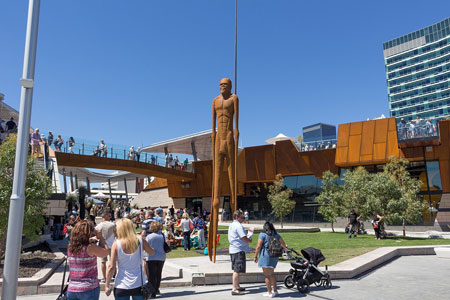
City of Kwinana
The City of Kwinana is a local government area of Western Australia. It covers an area of approximately 118 square kilometres in metropolitan Perth, and lies about 38 km south of Perth CBD, via the Kwinana Freeway. Kwinana maintains 287 km of roads and had a population of almost 39,000 as at the 2016 Census.
City of Kwinana History
Kwinana is a Kimberley Aboriginal word meaning either "young woman" or "pretty maiden". The ship SS Kwinana was wrecked on Cockburn Sound in 1922 and blown onto Kwinana Beach. The nearby area acquired the name and it was officially adopted for a township in 1937. Some of its suburbs take their names from the sailing ships that first brought immigrants to Western Australia, for example, Medina, Calista and Parmelia.
The Kwinana Road District was formed out of part of Rockingham on 15 February 1954 as a result of the passage of the Kwinana Road District Act 1953. Section 4 of the Act stated that "there shall not be a duly elected Road Board for the Kwinana Road District but the Governor may, by Order in Council, appoint a fit and proper person having a comprehensive knowledge and experience of local government matters to be Commissioner of the district."
City of Kwinana Suburbs
Anketell, Bertram, Calista, Casuarina, Hope Valley, Kwinana Beach, Kwinana Town Centre, Leda, Mandogalup, Medina, Naval Base, Orelia, Parmelia, Postans, The Spectacles, Wandi, WellardAbout the Japanese Language
Japanese (日本語) "Nihon-go" in Japanese) is the language spoken in Japan, in East Asia. Japanese uses three separate writing systems: hiragana, katakana, and kanji. The first two are phonetic systems (writing that shows the pronunciation of Japanese words), and kanji is the Japanese variation of Chinese characters (which show the meaning of Japanese words). The three systems are used interchangeably, and all three systems can often be found in the same sentence. The three systems are each reserved for different purposes.
Little is known of the language's prehistory, or when it first appeared in Japan. Chinese documents from the 3rd century recorded a few Japanese words, but substantial texts did not appear until the 8th century. During the Heian period (794–1185), Chinese had considerable influence on the vocabulary and phonology of Old Japanese. Late Middle Japanese (1185–1600) included changes in features that brought it closer to the modern language, and the first appearance of European loanwords. The standard dialect moved from the Kansai region to the Edo (modern Tokyo) region in the Early Modern Japanese period (early 17th century–mid-19th century). Following the end in 1853 of Japan's self-imposed isolation, the flow of loanwords from European languages increased significantly. English loanwords, in particular, have become frequent, and Japanese words from English roots have proliferated.
Japanese is an agglutinative, mora-timed language with simple phonotactics, a pure vowel system, phonemic vowel and consonant length, and a lexically significant pitch-accent. Word order is normally subject–object–verb with particles marking the grammatical function of words, and sentence structure is topic–comment. Sentence-final particles are used to add emotional or emphatic impact, or make questions. Nouns have no grammatical number or gender, and there are no articles. Verbs are conjugated, primarily for tense and voice, but not person. Japanese equivalents of adjectives are also conjugated. Japanese has a complex system of honorifics with verb forms and vocabulary to indicate the relative status of the speaker, the listener, and persons mentioned.
Japanese has no genetic relationship with Chinese, but it makes extensive use of Chinese characters, or kanji (漢字), in its writing system, and a large portion of its vocabulary is borrowed from Chinese. Along with kanji, the Japanese writing system primarily uses two syllabic (or moraic) scripts, hiragana (ひらがな or 平仮名) and katakana (カタカナ or 片仮名). Latin script is used in a limited fashion, such as for imported acronyms, and the numeral system uses mostly Arabic numerals alongside traditional Chinese numerals.
City of Kwinana Japanese Translator Services
Japanese translator for certified translation services:
- Japanese driving license translation
- Japanese financial translation and bank statement translations
- Japanese birth certificate translation
- Japanese marriage certificate translation
- Japanese name-change certificate translation
- Japanese degree translation
- Japanese diploma translation
- Japanese school transcript translation
- Japanese passport translation
- Japanese police report translation
- Japanese police check translation
- Japanese personal letters and cards
- Japanese utility bill translations
- Japanese death certificate translation
Perth Translation provides fast and affordable Japanese translation services in the City of Kwinana for all types of personal documents by NAATI translators.
Japanese Document Translation
Japanese official documents are written in standard Japanese (hyojungo) regardless of regional dialect. However, documents may vary in format depending on whether they are issued by municipal offices, prefectural governments, or national ministries. Historical family register documents (koseki) can use archaic kanji forms that require specialist knowledge.
Japanese Document Types
Key Japanese civil documents include koseki tohon (family register), jumin-hyo (residence certificate), and sotsugyou shomeisho (graduation certificate).
Where Japanese Is Official
Japanese is the de facto national language of Japan, though it has no explicit constitutional designation as the official language. All government documents, legislation, and judicial records are issued exclusively in Japanese. Japan's civil registration system (koseki) produces uniquely formatted family documents not found in other legal traditions.
Japanese uses three writing systems: kanji (Chinese characters), hiragana, and katakana. The Hepburn romanisation system is standard for transliterating Japanese names into English. Consistent romanisation of personal and place names is essential for identity document translations.
About City of Kwinana
The City of Kwinana covers about 120 square kilometres south of Cockburn, with a population of approximately 45,000. It combines a significant industrial strip along the coast — including heavy manufacturing and resource processing — with rapidly expanding residential estates further inland around Wellard and Bertram.
Key suburbs include Kwinana Town Centre, Wellard, Bertram, Orelia, Parmelia, and Baldivis (shared with Rockingham), with the Kwinana Marketplace as the main shopping facility.
The council's administration centre is on Gilmore Avenue in Kwinana Town Centre, adjacent to the Kwinana Public Library. The Darius Wells Library and Resource Centre in Wellard opened as a modern community hub, and the Kwinana Recquatic facility provides sports and aquatic amenities.
Wellard and Kwinana stations on the Mandurah line provide rail access to Perth and Mandurah. Kwinana Freeway and Thomas Road are the primary road corridors, with bus services connecting residential areas to train stations.
