
Perth Translation Services » Perth » City of Melville Translation Services » City of Melville Indonesian Translation Service
City of Melville Indonesian Translation Services
 Get fast and professional translation services in City of Melville. We have NAATI certified Indonesian translators providing translation of all types of documents. These include confidential legal, financial and migration document translations.
Legal Contract Translation City of Melville
Medical Translation City of Melville
Get A Quick Quote
City of Melville
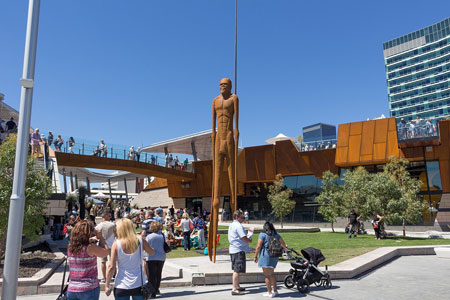
The City of Melville is a local government area in the southern suburbs of the Western Australian capital city of Perth, east of the port city of Fremantle and about 12 kilometres (7.5 mi) south of Perth's central business district. The City covers an area of 52.73 square kilometres (20.36 sq mi) and had a population of about 98,000 as at the 2016 Census.
City of Melville History
Melville was originally established on 14 December 1900 as the East Fremantle Road District under the Roads Boards Act 1871. It was renamed Melville six months later. In 1923, it received a large amount of land from Jandakot Road District when that entity was abolished.
On 1 July 1961, it became a shire following the enactment of the Local Government Act 1960. The Shire of Melville was declared a town on 28 September 1962, and a city on 3 May 1968.
City of Melville Suburbs
Alfred Cove, Applecross, Ardross, Attadale, Bateman, Bicton, Booragoon, Brentwood, Bull Creek, Kardinya, Leeming, Melville, Mount Pleasant, Murdoch, Myaree, Palmyra, Willagee, WinthropAbout the Indonesian Language
Indonesian is the official language of Indonesia. It is a standardized register of Malay, an Austronesian language that has been used as a lingua franca in the multilingual Indonesian archipelago for centuries. Indonesia is the fourth most populous nation in the world. Indonesian is one of the most widely spoken languages in the world.
Most Indonesians, aside from speaking the national language, are fluent in any of more than 700 indigenous local languages; examples include Javanese, Sundanese and Balinese, which are commonly used at home.
The nationalist movement that ultimately brought Indonesian to its national language status rejected Dutch from the outset. However, the rapid disappearance of Dutch was a very unusual case compared with other colonized countries, where the colonial language generally has continued to function as the language of politics, bureaucracy, education, technology, and other important areas for a significant time after independence. Soenjono Dardjowidjojo even goes so far as to say that "Indonesian is perhaps the only language that has achieved the status of a national language in its true sense" since it truly dominates in all spheres of Indonesian society. The ease with which Indonesia eliminated the language of its former colonial power can perhaps be explained as much by Dutch policy as by Indonesian nationalism, though. In marked contrast to the French, Spanish and Portuguese, who pursued an assimilation colonial policy, or even the British, the Dutch did not attempt to spread their language among the indigenous population. In fact, they consciously prevented the language from being spread by refusing to provide education, especially in Dutch, to the native Indonesians so they would not come to see themselves as equals. Moreover, the Dutch wished to prevent the Indonesians from elevating their perceived social status by taking on elements of Dutch culture. Thus, until the 1930s, they maintained a minimalist regime and allowed Malay to spread quickly throughout the archipelago.
Dutch dominance at that time covered nearly all aspects, with official forums requiring the use of Dutch, although since the Youth Congress (1928) the use of Indonesian as the national language was agreed on as one of the tools in the pro-independence struggle. As of it, Mohammad Hoesni Thamrin inveighed actions underestimating Indonesian. After some criticism and protests, the use of Indonesian was allowed since the Volksraad sessions held in July 1938. By the time they tried to counter the spread of Malay by teaching Dutch to the natives, it was too late, and in 1942, the Japanese conquered Indonesia and outlawed the use of the Dutch language. Three years later, the Indonesians themselves formally abolished the language and established Bahasa Indonesia as the national language of the new nation.
City of Melville Indonesian Translator Services
Indonesian translator for certified translation services:
- Indonesian driving license translation
- Indonesian financial translation and bank statement translations
- Indonesian birth certificate translation
- Indonesian marriage certificate translation
- Indonesian name-change certificate translation
- Indonesian degree translation
- Indonesian diploma translation
- Indonesian school transcript translation
- Indonesian passport translation
- Indonesian police report translation
- Indonesian police check translation
- Indonesian personal letters and cards
- Indonesian utility bill translations
- Indonesian death certificate translation
Perth Translation provides fast and affordable Indonesian translation services in the City of Melville for all types of personal documents by NAATI translators.
Indonesian Document Translation
Bahasa Indonesia is the standardised national language, distinct from the hundreds of regional languages spoken across the archipelago. Official documents uniformly use standard Indonesian regardless of the issuing province. However, older documents from the Dutch colonial period or early independence era may contain legacy terminology that differs from modern usage.
Indonesian Document Types
Key Indonesian civil documents include akta kelahiran (birth certificate), akta perkawinan (marriage certificate), and kartu tanda penduduk (national identity card).
Where Indonesian Is Official
Indonesian is the sole official language of Indonesia, a nation of over 270 million people. It is mutually intelligible with Malay but uses distinct official terminology and document formats. Indonesian documents follow formatting standards set by the Ministry of Home Affairs.
Indonesian uses the Latin alphabet. The modern Ejaan Yang Disempurnakan (EYD) spelling system replaced the older Van Ophuijsen and Soewandi systems, so documents from different eras may spell the same words differently (e.g. tj vs c, dj vs j).
About City of Melville
The City of Melville covers approximately 53 square kilometres along the Swan River's southern bank, with a population of around 103,000. It is a predominantly affluent, well-established residential area with mature tree-lined streets, though higher-density development is increasing around the Canning Bridge and Riseley Street precincts.
Notable suburbs include Melville, Applecross, Mount Pleasant, Booragoon, Willagee, Myaree, and Bull Creek, with Garden City Booragoon as the major shopping destination.
The civic centre and council administration are on Almondbury Road in Booragoon, near the City of Melville Library. The Melville Aquatic Fitness Centre and LeisureFit Booragoon provide recreational facilities, and community halls are located in Melville, Applecross, and Willagee.
Canning Bridge and Bull Creek stations on the Mandurah line serve the area, with Canning Bridge functioning as a major bus interchange. Leach Highway, Canning Highway, and Riseley Street provide road connectivity, and the Kwinana Freeway runs along the eastern boundary.
