
Perth Translation Services » Perth » City of Nedlands Translation Services » City of Nedlands Spanish Translation Service
City of Nedlands Spanish Translation Services
 Get fast and professional translation services in City of Nedlands. We have NAATI certified Spanish translators providing translation of all types of documents. These include confidential legal, financial and migration document translations.
Legal Contract Translation City of Nedlands
Medical Translation City of Nedlands
Get A Quick Quote
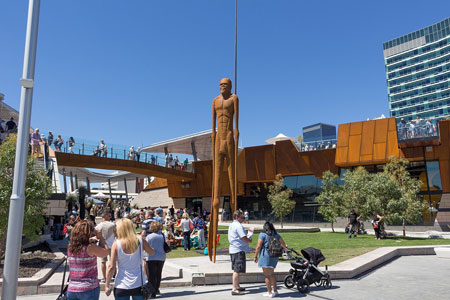
City of Nedlands
The City of Nedlands is a local government area in the inner western suburbs of the Western Australian capital city of Perth, about 7 kilometres (4 mi) west of Perth's central business district. The City covers an area of 20.0 square kilometres (7.7 sq mi), maintains 137 km of roads and a little over 380 hectares of parks and gardens, and has a population of over 21,000 as of 2016.
City of Nedlands History
The City of Nedlands had its origins in the Claremont Road District, which was created in 1893 after a petition from ratepayers who lived in the areas of Nedlands and Claremont, which had grown substantially in population at the end of the 19th century. Seven men were nominated to the new Board, which became the first local government authority for the Nedlands/Claremont area. In 1898, Claremont itself split away to form a municipal government, which still exists today as the Town of Claremont.
In 1932, the Claremont Road Board was renamed Nedlands, and on 1 July 1959, it became a city. The City was made up of four wards – Melvista, Hollywood, Dalkeith and Coastal. These wards continue to the present day.
"On 1 July, 1959 the City of Nedlands was proclaimed at the command of Governor Sir Charles Gairdner, in the packed Dalkeith Civic Hall. Mr Allan Jenkins read out the proclamation and the Minister for Local Government, Mr Leslie Logan, M.L.C. conducted the official swearing in ceremony of the new Mayor, John Charles Smith, the twelve new Councillors and the auditors. He then appointed Mr Allan Jenkins as the City's first Town Clerk. Among those present was MLA for Nedlands, Deputy Premier Charles Court." - From the City of Nedlands Council Website https://www.nedlands.wa.gov.au/history. City of Nedlands community Facebook page: https://www.facebook.com/nedlands/.
City of Nedlands Suburbs
Dalkeith, Floreat, Karrakatta, Mount Claremont, Nedlands, Shenton Park, SwanbourneAbout the Spanish Language
The Spanish language is a Western Romance language that originated in the Castile region of Spain and today has hundreds of millions of native speakers in Latin America and Spain.
Beginning in the early 16th century, Spanish was taken to the colonies of the Spanish Empire, most notably to the Americas, as well as territories in Africa, Oceania and the Philippines. Around 75% of modern Spanish vocabulary is derived from Latin. Ancient Greek has also contributed substantially to Spanish vocabulary, especially through Latin, where it had a great impact.
The Spanish language evolved from Vulgar Latin, which was brought to the Iberian Peninsula by the Romans during the Second Punic War, beginning in 210 BC. Previously, several pre-Roman languages (also called Paleohispanic languages)—some related to Latin via Indo-European, and some that are not related at all—were spoken in the Iberian Peninsula. These languages included Basque (still spoken today), Iberian, Celtiberian and Gallaecian.
The first documents to show traces of what is today regarded as the precursor of modern Spanish are from the 9th century. Throughout the Middle Ages and into the modern era, the most important influences on the Spanish lexicon came from neighboring Romance languages—Mozarabic (Andalusi Romance), Navarro-Aragonese, Leonese, Catalan, Portuguese, Galician, Occitan, and later, French and Italian. Spanish also borrowed a considerable number of words from Arabic, as well as a minor influence from the Germanic Gothic language through the migration of tribes and a period of Visigoth rule in Iberia. In addition, many more words were borrowed from Latin through the influence of written language and the liturgical language of the Church. The loanwords were taken from both Classical Latin and Renaissance Latin, the form of Latin in use at that time.
According to the theories of Ramón Menéndez Pidal, local sociolects of Vulgar Latin evolved into Spanish, in the north of Iberia, in an area centered in the city of Burgos, and this dialect was later brought to the city of Toledo, where the written standard of Spanish was first developed, in the 13th century. In this formative stage, Spanish developed a strongly differing variant from its close cousin, Leonese, and, according to some authors, was distinguished by a heavy Basque influence (see Iberian Romance languages). This distinctive dialect spread to southern Spain with the advance of the Reconquista, and meanwhile gathered a sizable lexical influence from the Arabic of Al-Andalus, much of it indirectly, through the Romance Mozarabic dialects (some 4,000 Arabic-derived words, make up around 8% of the language today). The written standard for this new language was developed in the cities of Toledo, in the 13th to 16th centuries, and Madrid, from the 1570s.
City of Nedlands Spanish Translator Services
Spanish translator for certified translation services:
- Spanish driving license translation
- Spanish financial translation and bank statement translations
- Spanish birth certificate translation
- Spanish marriage certificate translation
- Spanish name-change certificate translation
- Spanish degree translation
- Spanish diploma translation
- Spanish school transcript translation
- Spanish passport translation
- Spanish police report translation
- Spanish police check translation
- Spanish personal letters and cards
- Spanish utility bill translations
- Spanish death certificate translation
Perth Translation provides fast and affordable Spanish translation services in the City of Nedlands for all types of personal documents by NAATI translators.
Spanish Document Translation
Spanish exhibits substantial variation across its global speaking community, with significant lexical and structural differences between Peninsular Spanish and Latin American varieties. Document terminology varies by country — for instance, a driver's licence may appear as carnet de conducir (Spain), licencia de conducir (Argentina), or brevete (Peru). Translators must identify the document's country of origin to apply the correct terminological conventions.
Spanish Document Types
Birth certificates are called acta de nacimiento or partida de nacimiento depending on the issuing country, while marriage certificates appear as acta de matrimonio. Criminal background checks are variously titled certificado de antecedentes penales or certificado de buena conducta.
Where Spanish Is Official
Spanish is the official or co-official language of 20 sovereign nations and is the fourth most spoken language globally by total number of speakers. In Spain, it coexists with co-official regional languages including Catalan, Basque, and Galician, each of which has its own document traditions. Spanish holds official status in major international organisations including the United Nations, the European Union, and the Organization of American States.
Spanish uses the Latin alphabet with the addition of ñ and diacritical acute accents that indicate stress and distinguish homographs (e.g., sí vs si). The diaeresis (ü) appears in syllables like güe and güi and must be retained in proper translations.
About City of Nedlands
The City of Nedlands covers approximately 20 square kilometres on the northern bank of the Swan River, west of Perth CBD. With a population of around 23,000, it is one of Perth's most established and affluent residential areas, shaped significantly by the presence of the University of Western Australia and several major hospital campuses.
The LGA includes Nedlands, Dalkeith, Mount Claremont, Karrakatta, Shenton Park, and Floreat Park, with Hampden Road and Broadway serving as the main local commercial strips.
Council offices are on Stirling Highway in Nedlands, with the Nedlands Library located nearby. The area houses several state-level institutions including QEII Medical Centre, Sir Charles Gairdner Hospital, and Hollywood Private Hospital.
Stirling Highway is the primary east-west corridor connecting to both Perth CBD and Fremantle. The Loch Street and Shenton Park stations are on the Fremantle line, and multiple bus routes operate along Stirling Highway and through the UWA campus.
