
Perth Translation Services » Perth » City of Stirling Translation Services » City of Stirling Croatian Translation Service
City of Stirling Croatian Translation Services
 Get fast and professional translation services in City of Stirling. We have NAATI certified Croatian translators providing translation of all types of documents. These include confidential legal, financial and migration document translations.
Legal Contract Translation City of Stirling
Medical Translation City of Stirling
Get A Quick Quote
City of Stirling
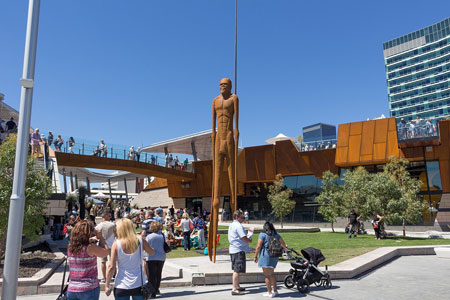
The City of Stirling is a local government area in the northern suburbs of the Western Australian capital city of Perth about 10 kilometres (6 mi) north of Perth's central business district. The City covers an area of 105.2 square kilometres (40.6 sq mi) and had a population of over 210,000 as at the 2016 Census, making it the largest local government area by population in Western Australia.
City of Stirling History
Stirling was established in 1871 as the Perth Road District under the District Roads Act 1871. The district at that time included what are now the Cities of Wanneroo, Joondalup, Bayswater and Belmont.
With the passage of the Local Government Act 1960, all road districts became shires effective from 1 July 1961. The Shire of Perth had a population of 84,000 in 1961. It was declared a city and renamed Stirling on 24 January 1971.
City of Stirling Suburbs
Balcatta, Balga, Carine, Churchlands, Coolbinia, Dianella, Doubleview, Glendalough, Gwelup, Hamersley, Inglewood, Innaloo, Joondanna, Karrinyup, Menora, Mirrabooka, Mount Lawley, Nollamara, North Beach, Herdsman, Osborne Park, Scarborough, Stirling, Trigg, Tuart Hill, Watermans Bay, Wembley, Wembley Downs, Westminster, Woodlands, YokineAbout the Croatian Language
Croatian is the standardized variety of the Serbo-Croatian language used by Croats, principally in Croatia, Bosnia and Herzegovina, the Serbian province of Vojvodina and other neighboring countries. Croatian is one of the official languages of the European Union, Bosnia and Herzegovina.
Standard Croatian is based on the most widespread dialect of Serbo-Croatian, Shtokavian, more specifically on Eastern Herzegovinian, which is also the basis of Standard Serbian, Bosnian, and Montenegrin.
Croatian, although technically a form of Serbo-Croatian, is sometimes considered a distinct language by itself. Purely linguistic considerations of languages based on mutual intelligibility (abstand languages) are frequently incompatible with political conceptions of language so that varieties that are mutually intelligible can not be considered separate languages. Differences between various standard forms of Serbo-Croatian are often exaggerated for political reasons. Most Croatian linguists regard Croatian as a separate language that is considered key to national identity. The issue is sensitive in Croatia as the notion of a separate language being the most important characteristic of a nation is widely accepted, stemming from the 19th-century history of Europe. The 1967 Declaration on the Status and Name of the Croatian Literary Language, in which a group of Croatian authors and linguists demanded greater autonomy for the Croatian language, is viewed in Croatia as a linguistic policy milestone that was also a general milestone in national politics. At the 50th anniversary of the Declaration, at the beginning of 2017, a two-day meeting of experts from Croatia, Bosnia-Herzegovina, Serbia and Montenegro was organized in Zagreb, at which the text of the Declaration on the Common Language of Croats, Bosniaks, Serbs and Montenegrins was drafted. The new Declaration has received more than ten thousand signatures. It states that in Croatia, Serbia, Bosnia-Herzegovina and Montenegro a common polycentric standard language is used, consisting of several standard varieties, such as German, English or Spanish. The aim of the new Declaration is to stimulate discussion on language without the nationalistic baggage and to counter nationalistic divisions.
The terms "Serbo-Croatian" or "Serbo-Croat" are still used as a cover term for all these forms by foreign scholars, even though the speakers themselves largely do not use it. Within ex-Yugoslavia, the term has largely been replaced by the ethnic terms Serbian, Croatian, and Bosnian.
City of Stirling Croatian Translator Services
Croatian translator for certified translation services:
- Croatian driving license translation
- Croatian financial translation and bank statement translations
- Croatian birth certificate translation
- Croatian marriage certificate translation
- Croatian name-change certificate translation
- Croatian degree translation
- Croatian diploma translation
- Croatian school transcript translation
- Croatian passport translation
- Croatian police report translation
- Croatian police check translation
- Croatian personal letters and cards
- Croatian utility bill translations
- Croatian death certificate translation
Perth Translation provides fast and affordable Croatian translation services in the City of Stirling for all types of personal documents by NAATI translators.
Croatian Document Translation
Standard Croatian is based on the Shtokavian dialect with ijekavian pronunciation, though Chakavian and Kajkavian dialects are spoken in coastal and northwestern regions respectively. Official documents uniformly use the literary standard regardless of region. Since Croatia's EU accession in 2013, document formats have increasingly aligned with European standards, though older documents from the Yugoslav era use different formatting and terminology that translators must recognise.
Croatian Document Types
Croatian civil documents include the rodni list (birth certificate), vjenčani list (marriage certificate), and vozačka dozvola (driving licence). Civil registry documents are issued by the matični ured (registry office) and may carry the heading Izvadak iz matice rođenih (extract from the birth register).
Where Croatian Is Official
Croatian is the official language of Croatia and one of the three official languages of Bosnia and Herzegovina. It became the 24th official language of the European Union upon Croatia's accession in 2013. Croatian documents now follow EU formatting standards for many document types, including driving licences and professional qualifications. It is also used by Croatian minority communities in Austria, Hungary, Italy, and Serbia.
Croatian uses the Latin alphabet exclusively, with the addition of the characters č, ć, dž, đ, š, and ž. These diacritical marks are essential for correct meaning and must be preserved in translations. Croatian also uses the digraphs lj and nj, each representing a single phoneme, which affects alphabetical ordering in official listings.
About City of Stirling
The City of Stirling covers approximately 105 square kilometres across Perth's inner and middle northern suburbs, with a population exceeding 220,000 — the most populous LGA in Western Australia. It encompasses a wide mix of suburban character, from beachside communities along Scarborough and Trigg to established inland suburbs like Dianella and Balcatta.
Key suburbs include Scarborough, Doubleview, Innaloo, Balcatta, Dianella, Yokine, Nollamara, and Karrinyup, with Westfield Innaloo and Karrinyup Shopping Centre as major retail centres.
The council's administration centre is on Cedric Street in Stirling. Libraries serve the community from Stirling, Karrinyup, Dianella, Mirrabooka, and other locations. The Scarborough Beach Pool and Stirling Leisure Centres in Hamersley and Inglewood provide aquatic and fitness facilities.
Stirling station is a major interchange on the Joondalup line, with the Stirling bus interchange connecting routes across the northern suburbs. Mitchell Freeway and the Scarborough Beach Road corridor are the main arterials, and the coastal suburbs are linked by West Coast Highway.
