
Perth Translation Services » Perth » City of Stirling Translation Services » City of Stirling Urdu Translation Service
City of Stirling Urdu Translation Services
 Get fast and professional translation services in City of Stirling. We have NAATI certified Urdu translators providing translation of all types of documents. These include confidential legal, financial and migration document translations.
Legal Contract Translation City of Stirling
Medical Translation City of Stirling
Get A Quick Quote
City of Stirling
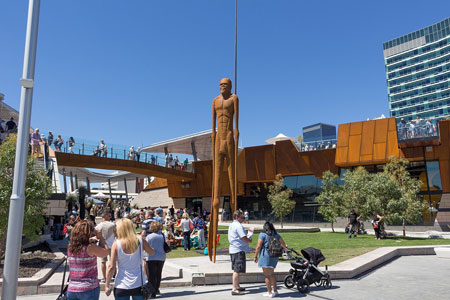
The City of Stirling is a local government area in the northern suburbs of the Western Australian capital city of Perth about 10 kilometres (6 mi) north of Perth's central business district. The City covers an area of 105.2 square kilometres (40.6 sq mi) and had a population of over 210,000 as at the 2016 Census, making it the largest local government area by population in Western Australia.
City of Stirling History
Stirling was established in 1871 as the Perth Road District under the District Roads Act 1871. The district at that time included what are now the Cities of Wanneroo, Joondalup, Bayswater and Belmont.
With the passage of the Local Government Act 1960, all road districts became shires effective from 1 July 1961. The Shire of Perth had a population of 84,000 in 1961. It was declared a city and renamed Stirling on 24 January 1971.
City of Stirling Suburbs
Balcatta, Balga, Carine, Churchlands, Coolbinia, Dianella, Doubleview, Glendalough, Gwelup, Hamersley, Inglewood, Innaloo, Joondanna, Karrinyup, Menora, Mirrabooka, Mount Lawley, Nollamara, North Beach, Herdsman, Osborne Park, Scarborough, Stirling, Trigg, Tuart Hill, Watermans Bay, Wembley, Wembley Downs, Westminster, Woodlands, YokineAbout the Urdu Language
The origin of the Urdu language is the Mughal Empire's word for army, Urdu. However, contrary to popular belief, Urdu was not created in the army camps of the Mughal Army. Urdu is spoken the same as present-day Hindi, but Hindi uses the traditional Devanagari script (a decedent of Sanskrit), whereas Urdu uses the Persio-Arabic alphabet.
The poet Ghulam Hamadani Mushafi coined the term Urdu for this language in 1780. However, this began to alienate the two major cultures in India/Pakistan, the Muslims and Hindus. Hindus began to speak and write Hindi, whereas Muslims would begin to speak Urdu.
In Pakistan, Urdu is mostly learned as a second or a third language as nearly 93% of Pakistan's population has a native language other than Urdu. Despite this, Urdu was chosen as a token of unity and as a lingua franca so as not to give any native Pakistani language preference over the other. Urdu is therefore spoken and understood by the vast majority in some form or another, including a majority of urban dwellers in such cities as Karachi, Lahore, Okara District, Sialkot, Rawalpindi, Islamabad, Multan, Faisalabad, Hyderabad, Peshawar, Quetta, Jhang, Sargodha and Skardu. It is written, spoken and used in all provinces/territories of Pakistan although the people from differing provinces may have different indigenous languages, as from the fact that it is the "base language" of the country. For this reason, it is also taught as a compulsory subject up to higher secondary school in both English and Urdu medium school systems. This has produced millions of Urdu speakers from people whose native language is one of the other languages of Pakistan, who can read and write only Urdu. It is absorbing many words from the regional languages of Pakistan.
Although most of the population is conversant in Urdu, it is the first language of only an estimated 7% of the population who are mainly Muslim immigrants (known as Muhajir in Pakistan) from different parts of South Asia. The regional languages are also being influenced by Urdu vocabulary. There are millions of Pakistanis whose native language is not Urdu, but because they have studied in Urdu medium schools, they can read and write Urdu along with their native language. Most of the nearly five million Afghan refugees of different ethnic origins (such as Pashtun, Tajik, Uzbek, Hazarvi, and Turkmen) who stayed in Pakistan for over twenty-five years have also become fluent in Urdu. With such a large number of people(s) speaking Urdu, the language has acquired a peculiar Pakistani flavour further distinguishing it from the Urdu spoken by native speakers and diversifying the language even further.
City of Stirling Urdu Translator Services
Urdu translator for certified translation services:
- Urdu driving license translation
- Urdu financial translation and bank statement translations
- Urdu birth certificate translation
- Urdu marriage certificate translation
- Urdu name-change certificate translation
- Urdu degree translation
- Urdu diploma translation
- Urdu school transcript translation
- Urdu passport translation
- Urdu police report translation
- Urdu police check translation
- Urdu personal letters and cards
- Urdu utility bill translations
- Urdu death certificate translation
Perth Translation provides fast and affordable Urdu translation services in the City of Stirling for all types of personal documents by NAATI translators.
Urdu Document Translation
Urdu is mutually intelligible with Hindi in spoken form but uses distinct vocabulary drawn from Arabic and Persian for formal and literary registers. Documents from Pakistan use standard Urdu terminology, while those from Indian states like Uttar Pradesh and Telangana may reflect regional Urdu varieties with localised administrative vocabulary. The Dakhni Urdu of southern India, while spoken, does not typically appear in official documents.
Urdu Document Types
Pakistani birth certificates are titled پیدائشی سرٹیفکیٹ (paidaishi certificate) and marriage certificates as نکاح ناما (nikah nama). Educational transcripts from Pakistani universities are commonly called ڈگری ٹرانسکرپٹ, and police clearance is a پولیس کلیئرنس سرٹیفکیٹ.
Where Urdu Is Official
Urdu is the national language of Pakistan, where it serves as the lingua franca and language of government, though only about 7% of Pakistanis speak it as a first language. In India, Urdu holds official status in the states of Jammu and Kashmir, Telangana, Uttar Pradesh, Bihar, Jharkhand, and West Bengal, and is one of India's 22 scheduled languages. It is widely used across South Asian diaspora communities globally, including a substantial population in Australia.
Urdu is written in a modified Perso-Arabic script called Nastaliq, flowing from right to left, with additional characters for sounds specific to South Asian languages. Romanisation of Urdu follows no single universal standard, which creates challenges when matching transliterated names across documents — translators must exercise careful judgement to ensure consistency with passport and identity record spellings.
About City of Stirling
The City of Stirling covers approximately 105 square kilometres across Perth's inner and middle northern suburbs, with a population exceeding 220,000 — the most populous LGA in Western Australia. It encompasses a wide mix of suburban character, from beachside communities along Scarborough and Trigg to established inland suburbs like Dianella and Balcatta.
Key suburbs include Scarborough, Doubleview, Innaloo, Balcatta, Dianella, Yokine, Nollamara, and Karrinyup, with Westfield Innaloo and Karrinyup Shopping Centre as major retail centres.
The council's administration centre is on Cedric Street in Stirling. Libraries serve the community from Stirling, Karrinyup, Dianella, Mirrabooka, and other locations. The Scarborough Beach Pool and Stirling Leisure Centres in Hamersley and Inglewood provide aquatic and fitness facilities.
Stirling station is a major interchange on the Joondalup line, with the Stirling bus interchange connecting routes across the northern suburbs. Mitchell Freeway and the Scarborough Beach Road corridor are the main arterials, and the coastal suburbs are linked by West Coast Highway.
