
Perth Translation Services » Perth » City of Subiaco Translation Services » City of Subiaco Korean Translation Service
City of Subiaco Korean Translation Services
 Get fast and professional translation services in City of Subiaco. We have NAATI certified Korean translators providing translation of all types of documents. These include confidential legal, financial and migration document translations.
Legal Contract Translation City of Subiaco
Medical Translation City of Subiaco
Get A Quick Quote
City of Subiaco
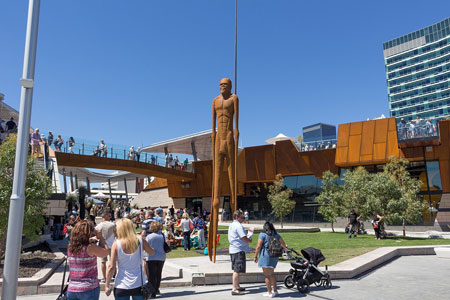
City of Subiaco is a local government area of Western Australia. It covers an area of approximately 7 km² in inner western metropolitan Perth, the capital of Western Australia and lies about 3 km west of the Perth CBD. Leafy Subiaco is a suburb centred on bustling Rokeby Road, with small boutiques and high-end cosmetics shops amid the stylish cafes, wine bars, trattorias and gastropubs. The landmark 1930s Regal Theatre hosts live music and comedy, while Subiaco Arts Centre is a modern space for exhibits, rock shows and edgy plays. Concerts are also held outside in the lush surrounding Theatre Gardens. The council's website: https://www.subiaco.wa.gov.au/
City of Subiaco History
The Subiaco Municipality was gazetted in 1896, and was proclaimed a city on 1 March 1952.
On 1 July 2016 the area south of Aberdare Road was transferred to the City of Perth.
City of Subiaco Suburbs
Crawley, Daglish, Jolimont, Shenton Park, SubiacoAbout the Korean Language
The Korean language (Korean), is spoken mainly in North and South Korea. It is spoken by more than 78 million people (most of whom are North or South Koreans).
In South Korea, the Korean language is called hangukmal (한국말) or hangugeo (Hangeul: 한국어, Hanja: 韓國語). In North Korea, however, it is called choseonmal (조선말) or choseoneo (조선어, 朝鮮語).
Modern Korean descends from Middle Korean, which in turn descends from Old Korean, which descends from the Proto-Koreanic language which is generally suggested to have its linguistic homeland somewhere in Manchuria. Whitman (2012) suggests that the proto-Koreans, already present in northern Korea, expanded into the southern part of the Korean Peninsula at around 300 BCe and coexist with the descendants of the Japonic Mumun cultivators (or assimilated them). Both had influence on each other and a later founder effect diminished the internal variety of both language families.
Chinese characters arrived in Korea (see Sino-Xenic pronunciations for further information) together with Buddhism during the Proto-Three Kingdoms era in the 1st century BC. It was adapted for Korean and became known as Hanja, and remained as the main script for writing Korean through over a millennium alongside various phonetic scripts that were later invented such as Idu, Gugyeol and Hyangchal. Mainly privileged elites were educated to read and write in Hanja. However, most of the population was illiterate. In the 15th century, King Sejong the Great personally developed an alphabetic featural writing system known today as Hangul. He felt that Hanja was inadequate to write Korean and that this was the cause of its very restricted use; Hangul was designed to either aid in reading Hanja or replace Hanja entirely. Introduced in the document "Hunminjeongeum", it was called "eonmun" (colloquial script) and quickly spread nationwide to increase literacy in Korea. Hangul was widely used by all the Korean classes but often treated as "amkeul" (script for female) and disregarded by privileged elites, whereas Hanja was regarded as "jinseo" (true text). Consequently, official documents were always written in Hanja during the Joseon era. Since most people couldn't understand Hanja, Korean kings sometimes released public notices entirely written in Hangul as early as the 16th century for all Korean classes, including uneducated peasants and slaves. By the 17th century, Korean elites Yangban and their slaves exchanged Hangul letters; that indicates a high literacy rate of Hangul during the Joseon era. Today, Hanja is largely unused in everyday life due to its inconvenience, but it is still important for historical and linguistic studies. Neither South Korea or North Korea opposes the learning of Hanja, though they are not officially used in North Korea anymore, and their usage in South Korea is mainly reserved for specific circumstances, such as newspapers, scholarly papers, and disambiguation.
Since the Korean War, through 70 years of separation, the North–South differences have developed in standard Korean, including variations in pronunciation and vocabulary chosen, but these minor differences can be found in any of the Korean dialects and still largely mutually intelligible.
City of Subiaco Korean Translator Services
Korean translator for certified translation services:
- Korean driving license translation
- Korean financial translation and bank statement translations
- Korean birth certificate translation
- Korean marriage certificate translation
- Korean name-change certificate translation
- Korean degree translation
- Korean diploma translation
- Korean school transcript translation
- Korean passport translation
- Korean police report translation
- Korean police check translation
- Korean personal letters and cards
- Korean utility bill translations
- Korean death certificate translation
Perth Translation provides fast and affordable Korean translation services in the City of Subiaco for all types of personal documents by NAATI translators.
Korean Document Translation
South Korean and North Korean official documents use different standardised vocabularies. South Korea follows the Seoul dialect standard, while North Korea uses the Pyongyang-based munhwao. Most translation requests in Perth involve South Korean documents, though defector documentation from North Korea requires awareness of DPRK-specific terminology and document structures.
Korean Document Types
Key Korean civil documents include gibon jeungmyeongseo (basic certificate from family relation register), jumindeungnok deungbon (resident registration), and joleopjeungmyeongseo (graduation certificate).
Where Korean Is Official
Korean is the official language of both South Korea and North Korea, each maintaining distinct standard language policies. South Korean documents follow formats mandated by the Ministry of Government Administration and Home Affairs. The two Koreas use different terminology for identical legal concepts.
Korean uses the Hangul alphabet. The Revised Romanisation system is the South Korean government standard for transliterating Korean names and terms into Latin script, though many Korean Australians use older McCune-Reischauer or personalised romanisations of their names.
About City of Subiaco
The City of Subiaco is one of Perth's smallest LGAs at just 7 square kilometres, located immediately west of the CBD with a population of approximately 20,000. Known for its village atmosphere and heritage streetscapes, it has experienced considerable urban renewal with higher-density residential development around the Subiaco train station precinct.
The LGA encompasses Subiaco, Daglish, Jolimont, and Shenton Park, with Rokeby Road and Hay Street forming the main retail and hospitality strip.
The Subiaco council chambers and administration offices are on Rokeby Road. The Subiaco Library is a well-used community facility, and Lords Recreation Centre provides sports and aquatic facilities. The Regal Theatre is a landmark cultural venue.
Subiaco and Daglish stations on the Fremantle line provide direct rail access to Perth CBD within minutes. Hay Street and Thomas Street are the main road corridors, and multiple bus routes connect through the area along Bagot Road and Roberts Road.
