
Perth Translation Services » Perth » City of Subiaco Translation Services » City of Subiaco Malay Translation Service
City of Subiaco Malay Translation Services
 Get fast and professional translation services in City of Subiaco. We have NAATI certified Malay translators providing translation of all types of documents. These include confidential legal, financial and migration document translations.
Legal Contract Translation City of Subiaco
Medical Translation City of Subiaco
Get A Quick Quote
City of Subiaco
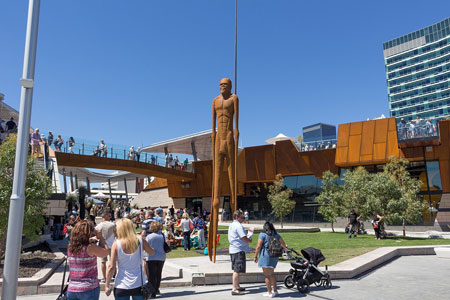
City of Subiaco is a local government area of Western Australia. It covers an area of approximately 7 km² in inner western metropolitan Perth, the capital of Western Australia and lies about 3 km west of the Perth CBD. Leafy Subiaco is a suburb centred on bustling Rokeby Road, with small boutiques and high-end cosmetics shops amid the stylish cafes, wine bars, trattorias and gastropubs. The landmark 1930s Regal Theatre hosts live music and comedy, while Subiaco Arts Centre is a modern space for exhibits, rock shows and edgy plays. Concerts are also held outside in the lush surrounding Theatre Gardens. The council's website: https://www.subiaco.wa.gov.au/
City of Subiaco History
The Subiaco Municipality was gazetted in 1896, and was proclaimed a city on 1 March 1952.
On 1 July 2016 the area south of Aberdare Road was transferred to the City of Perth.
City of Subiaco Suburbs
Crawley, Daglish, Jolimont, Shenton Park, SubiacoAbout the Malay Language
The Malay language, or Bahasa Melayu, is a language spoken by ethnic Malays, an ethnic group that live in the Malay Peninsula and the Malay Archipelago in Southeast Asia, as well as the Austronesian people of the area.
The Malay language is the national language of Malaysia (Malaysian), Brunei, Indonesia (Indonesian), an official language in Singapore, a working language in East Timor (Indonesian), and a recognized and significant minority in Thailand, Vietnam, Philippines and Cambodia.
Standard Malay, also called Court Malay, was the literary standard of the pre-colonial Malacca and Johor Sultanates, and so the language is sometimes called Malacca, Johor or Riau Malay (or various combinations of those names) to distinguish it from the various other Malayan languages. According to Ethnologue 16, several of the Malayan varieties they currently list as separate languages, including the Orang Asli varieties of Peninsular Malay, are so closely related to standard Malay that they may prove to be dialects. There are also several Malay trade and creole languages which are based on a lingua franca derived from Classical Malay as well as Macassar Malay, which appears to be a mixed language.
Malay is a member of the Austronesian family of languages, which includes languages from Southeast Asia and the Pacific Ocean, with a smaller number in continental Asia. Malagasy, a geographic outlier spoken in Madagascar in the Indian Ocean, is also a member of this language family. Although these languages are not necessarily mutually intelligible to any extent, their similarities are rather striking. Many roots have come virtually unchanged from their common ancestor, Proto-Austronesian language. There are many cognates found in the languages' words for kinship, health, body parts and common animals. Numbers, especially, show remarkable similarities.
Within Austronesian, Malay is part of a cluster of numerous closely related forms of speech known as the Malayic languages, which were spread across Malaya and the Indonesian archipelago by Malay traders from Sumatra. There is disagreement as to which varieties of speech popularly called "Malay" should be considered dialects of this language, and which should be classified as distinct Malay languages. The vernacular of Brunei—Brunei Malay—for example, is not readily intelligible with the standard language, and the same is true with some lects on the Malay Peninsula such as Kedah Malay. However, both Brunei and Kedah are quite close.
The closest relatives of the Malay languages are those left behind on Sumatra, such as the Minangkabau language, with 5.5 million speakers on the west coast.
City of Subiaco Malay Translator Services
Malay translator for certified translation services:
- Malay driving license translation
- Malay financial translation and bank statement translations
- Malay birth certificate translation
- Malay marriage certificate translation
- Malay name-change certificate translation
- Malay degree translation
- Malay diploma translation
- Malay school transcript translation
- Malay passport translation
- Malay police report translation
- Malay police check translation
- Malay personal letters and cards
- Malay utility bill translations
- Malay death certificate translation
Perth Translation provides fast and affordable Malay translation services in the City of Subiaco for all types of personal documents by NAATI translators.
Malay Document Translation
Standard Malay varies between Malaysia (Bahasa Malaysia), Brunei, and Singapore, each maintaining distinct official terminology and document conventions. Malaysian government documents follow Dewan Bahasa dan Pustaka standards, while Brunei and Singapore have their own administrative vocabularies. The language is mutually intelligible with Indonesian but uses different official terminology.
Malay Document Types
Key Malay civil documents include sijil kelahiran (birth certificate), sijil perkahwinan (marriage certificate), and sijil peperiksaan (examination certificate).
Where Malay Is Official
Malay is the official language of Malaysia, Brunei, and one of four official languages of Singapore. Within Malaysia, each of the thirteen states and three federal territories issues documents with state-specific headers, crests, and formatting conventions. Federal and state document standards can differ.
Modern Malay uses the Latin alphabet (Rumi script). Older documents may use Jawi script (Arabic-based), particularly from religious authorities or pre-independence records. Some Malaysian states still issue Islamic family law documents in Jawi alongside Rumi transliterations.
About City of Subiaco
The City of Subiaco is one of Perth's smallest LGAs at just 7 square kilometres, located immediately west of the CBD with a population of approximately 20,000. Known for its village atmosphere and heritage streetscapes, it has experienced considerable urban renewal with higher-density residential development around the Subiaco train station precinct.
The LGA encompasses Subiaco, Daglish, Jolimont, and Shenton Park, with Rokeby Road and Hay Street forming the main retail and hospitality strip.
The Subiaco council chambers and administration offices are on Rokeby Road. The Subiaco Library is a well-used community facility, and Lords Recreation Centre provides sports and aquatic facilities. The Regal Theatre is a landmark cultural venue.
Subiaco and Daglish stations on the Fremantle line provide direct rail access to Perth CBD within minutes. Hay Street and Thomas Street are the main road corridors, and multiple bus routes connect through the area along Bagot Road and Roberts Road.
