
Perth Translation Services » Perth » City of Subiaco Translation Services » City of Subiaco Portuguese Translation Service
City of Subiaco Portuguese Translation Services
 Get fast and professional translation services in City of Subiaco. We have NAATI certified Portuguese translators providing translation of all types of documents. These include confidential legal, financial and migration document translations.
Legal Contract Translation City of Subiaco
Medical Translation City of Subiaco
Get A Quick Quote
City of Subiaco
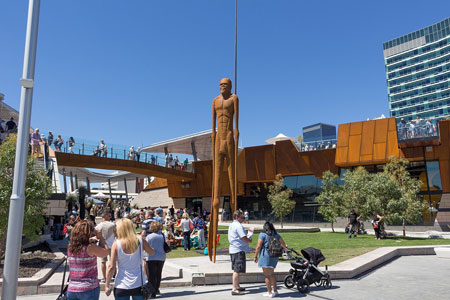
City of Subiaco is a local government area of Western Australia. It covers an area of approximately 7 km² in inner western metropolitan Perth, the capital of Western Australia and lies about 3 km west of the Perth CBD. Leafy Subiaco is a suburb centred on bustling Rokeby Road, with small boutiques and high-end cosmetics shops amid the stylish cafes, wine bars, trattorias and gastropubs. The landmark 1930s Regal Theatre hosts live music and comedy, while Subiaco Arts Centre is a modern space for exhibits, rock shows and edgy plays. Concerts are also held outside in the lush surrounding Theatre Gardens. The council's website: https://www.subiaco.wa.gov.au/
City of Subiaco History
The Subiaco Municipality was gazetted in 1896, and was proclaimed a city on 1 March 1952.
On 1 July 2016 the area south of Aberdare Road was transferred to the City of Perth.
City of Subiaco Suburbs
Crawley, Daglish, Jolimont, Shenton Park, SubiacoAbout the Portuguese Language
Portuguese is a West Romance language and the sole official language of Portugal, Brazil, Cape Verde, Guinea-Bissau, Mozambique, Angola, and São Tomé and Príncipe. It also has co-official language status in East Timor, Equatorial Guinea and Macau in China.
As the result of expansion during colonial times, a cultural presence of Portuguese and Portuguese creole speakers are also found in Goa, Daman and Diu in India; in Batticaloa on the east coast of Sri Lanka; in the Indonesian island of Flores; in the Malacca state of Malaysia; and the ABC islands in the Caribbean.
Portuguese evolved from the medieval language, known today by linguists as Galician-Portuguese, Old Portuguese or Old Galician, of the northwestern medieval Kingdom of Galicia and County of Portugal. It is in Latin administrative documents of the 9th century that written Galician-Portuguese words and phrases are first recorded. This phase is known as Proto-Portuguese, which lasted from the 9th century until the 12th-century independence of the County of Portugal from the Kingdom of León, which had by then assumed reign over Galicia.
In the first part of the Galician-Portuguese period (from the 12th to the 14th century), the language was increasingly used for documents and other written forms. For some time, it was the language of preference for lyric poetry in Christian Hispania, much as Occitan was the language of the poetry of the troubadours in France. The Occitan digraphs lh and nh, used in its classical orthography, were adopted by the orthography of Portuguese, presumably by Gerald of Braga, a monk from Moissac, who became bishop of Braga in Portugal in 1047, playing a major role in modernizing written Portuguese using classical Occitan norms. Portugal became an independent kingdom in 1139, under King Afonso I of Portugal. In 1290, King Denis of Portugal created the first Portuguese university in Lisbon (the Estudos Gerais, which later moved to Coimbra) and decreed for Portuguese, then simply called the "common language", to be known as the Portuguese language and used officially.
In the second period of Old Portuguese, in the 15th and 16th centuries, with the Portuguese discoveries, the language was taken to many regions of Africa, Asia, and the Americas. By the mid-16th century, Portuguese had become a lingua franca in Asia and Africa, used not only for colonial administration and trade but also for communication between local officials and Europeans of all nationalities.
Its spread was helped by mixed marriages between Portuguese and local people and by its association with Roman Catholic missionary efforts, which led to the formation of creole languages such as that called Kristang in many parts of Asia (from the word cristão, "Christian"). The language continued to be popular in parts of Asia until the 19th century. Some Portuguese-speaking Christian communities in India, Sri Lanka, Malaysia, and Indonesia preserved their language even after they were isolated from Portugal.
City of Subiaco Portuguese Translator Services
Portuguese translator for certified translation services:
- Portuguese driving license translation
- Portuguese financial translation and bank statement translations
- Portuguese birth certificate translation
- Portuguese marriage certificate translation
- Portuguese name-change certificate translation
- Portuguese degree translation
- Portuguese diploma translation
- Portuguese school transcript translation
- Portuguese passport translation
- Portuguese police report translation
- Portuguese police check translation
- Portuguese personal letters and cards
- Portuguese utility bill translations
- Portuguese death certificate translation
Perth Translation provides fast and affordable Portuguese translation services in the City of Subiaco for all types of personal documents by NAATI translators.
Portuguese Document Translation
Portuguese documents vary significantly between Brazilian Portuguese and European Portuguese in vocabulary, spelling, and document conventions. The 2009 Orthographic Agreement standardised some spelling differences, but many documents predate its adoption. Documents from Lusophone African nations (Mozambique, Angola, Cape Verde, Guinea-Bissau, Sao Tome) follow European Portuguese conventions but with locally specific administrative terminology.
Portuguese Document Types
Key Portuguese civil documents include certidao de nascimento (birth certificate), certidao de casamento (marriage certificate), and diploma (degree certificate).
Where Portuguese Is Official
Portuguese is the official language of Portugal, Brazil, Mozambique, Angola, Guinea-Bissau, East Timor, Cape Verde, and Sao Tome and Principe. It is an official EU language. Each country maintains distinct document formats, and differences between Brazilian and European Portuguese standards can be substantial in administrative contexts.
Portuguese uses the Latin alphabet with diacritical marks including acute and circumflex accents, the tilde on a and o, and the cedilla on c. The 2009 spelling reform eliminated some diacritics in European Portuguese, so documents from different periods may spell words differently.
About City of Subiaco
The City of Subiaco is one of Perth's smallest LGAs at just 7 square kilometres, located immediately west of the CBD with a population of approximately 20,000. Known for its village atmosphere and heritage streetscapes, it has experienced considerable urban renewal with higher-density residential development around the Subiaco train station precinct.
The LGA encompasses Subiaco, Daglish, Jolimont, and Shenton Park, with Rokeby Road and Hay Street forming the main retail and hospitality strip.
The Subiaco council chambers and administration offices are on Rokeby Road. The Subiaco Library is a well-used community facility, and Lords Recreation Centre provides sports and aquatic facilities. The Regal Theatre is a landmark cultural venue.
Subiaco and Daglish stations on the Fremantle line provide direct rail access to Perth CBD within minutes. Hay Street and Thomas Street are the main road corridors, and multiple bus routes connect through the area along Bagot Road and Roberts Road.
