
Perth Translation Services » Perth » City of Wanneroo Translation Services » City of Wanneroo Greek Translation Service
City of Wanneroo Greek Translation Services
 Get fast and professional translation services in City of Wanneroo. We have NAATI certified Greek translators providing translation of all types of documents. These include confidential legal, financial and migration document translations.
Legal Contract Translation City of Wanneroo
Medical Translation City of Wanneroo
Get A Quick Quote
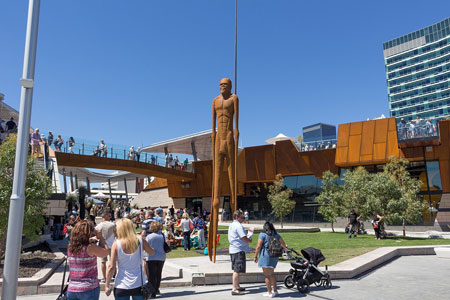
City of Wanneroo
The City of Wanneroo is a local government area with city status in the northern suburbs of Perth, Western Australia. It is centred approximately 25 kilometres (15.5 mi) north of Perth's central business district and forms part of the northern boundary of the Perth metropolitan area.
City of Wanneroo History
Prior to 1902, Wanneroo was part of the Perth Road District, which eventually went on to become the City of Stirling. Wanneroo was established on 31 October 1902 as a road board under the Roads Act 1888. The board was named after the Wanneroo wetlands in the area, first explored and recorded by John Butler in 1834.
With the passage of the Local Government Act 1960, all road boards became shires effective from 1 July 1961, and the Shire of Wanneroo came into being, encompassing everything north of Beach Road and west of Alexander Drive. With the development of and subsequent population growth surrounding Joondalup, the Shire of Wanneroo attained City status on 31 October 1985.
City of Wanneroo Suburbs
The City of Wanneroo includes the suburbs and localities of Alexander Heights, Alkimos, Ashby, Banksia Grove, Butler, Carabooda, Carramar, Clarkson, Darch, Eglinton, Girrawheen, Gnangara, Hocking, Jandabup, Jindalee, Koondoola, Landsdale, Madeley, Marangaroo, Mariginiup, Merriwa, Mindarie, Neerabup, Nowergup, Pearsall, Pinjar, Quinns Rocks, Ridgewood, Sinagra, Tamala Park, Tapping, Two Rocks, Wangara, Wanneroo, Woodvale (part) and Yanchep.About the Greek Language
The Greek language is the official language of Greece (Hellas) and Cyprus. It was first spoken in Greece and was also once spoken along the coast of Asia Minor (now a part of Turkey) and in southern Italy. It was also widely used in Western Asia and Northern Africa at one time. In Greek, the language is called Ελληνικά (elliniká).
Greeks write their language using the Greek alphabet. The Latin alphabet (used to write English and many other languages) came from the Greek alphabet. Many other alphabets around the world also came from the Greek one, such as the Cyrillic alphabet.
Greek is an independent branch of the Indo-European language family. The ancient language most closely related to it may be ancient Macedonian, which many scholars suggest may have been a dialect of Greek itself, but it is so poorly attested that it is difficult to conclude anything about it. Independently of the Macedonian question, some scholars have grouped Greek into Graeco-Phrygian, as Greek and the extinct Phrygian share features that are not found in other Indo-European languages. Among living languages, some Indo-Europeanists suggest that Greek may be most closely related to Armenian (see Graeco-Armenian) or the Indo-Iranian languages (see Graeco-Aryan), but little definitive evidence has been found for grouping the living branches of the family. In addition, Albanian has also been considered somewhat related to Greek and Armenian by some linguists. If proven and recognised, the three languages would form a new Balkan sub-branch with other dead European languages.
Modern Greek inherits most of its vocabulary from Ancient Greek, which in turn is an Indo-European language, but also includes a number of borrowings from the languages of the populations that inhabited Greece before the arrival of Proto-Greeks, some documented in Mycenaean texts; they include a large number of Greek toponyms. The form and meaning of many words have evolved. Loanwords (words of foreign origin) have entered the language, mainly from Latin, Venetian, and Turkish. During the older periods of Greek, loanwords into Greek acquired Greek inflections, thus leaving only a foreign root word. Modern borrowings (from the 20th century on), especially from French and English, are typically not inflected; other modern borrowings are derived from South Slavic (Macedonian/Bulgarian) and Eastern Romance languages (Aromanian and Megleno-Romanian).
City of Wanneroo Greek Translator Services
Greek translator for certified translation services:
- Greek driving license translation
- Greek financial translation and bank statement translations
- Greek birth certificate translation
- Greek marriage certificate translation
- Greek name-change certificate translation
- Greek degree translation
- Greek diploma translation
- Greek school transcript translation
- Greek passport translation
- Greek police report translation
- Greek police check translation
- Greek personal letters and cards
- Greek utility bill translations
- Greek death certificate translation
Perth Translation provides fast and affordable Greek translation services in the City of Wanneroo for all types of personal documents by NAATI translators.
Greek Document Translation
Modern Standard Greek (Demotic) is used uniformly in official documents throughout Greece and Cyprus. However, documents from Cyprus may contain Cypriot Greek vocabulary and institutional terminology specific to that country's administrative system. Documents from the Greek diaspora in countries like Egypt, Turkey, and Australia itself may be in archaic Katharevousa (the puristic form used officially until 1976) rather than modern Demotic Greek, requiring specialist knowledge of this now-defunct formal register.
Greek Document Types
Greek civil documents include the ληξιαρχική πράξη γεννήσεως (lixiarkhiki praxi genniseos, birth certificate), ληξιαρχική πράξη γάμου (lixiarkhiki praxi gamou, marriage certificate), and άδεια οδήγησης (adeia odigisis, driving licence). Civil records are maintained by the ληξιαρχείο (lixiarkhio, civil registry) of each municipality.
Where Greek Is Official
Greek is the official language of Greece and one of two official languages of Cyprus (alongside Turkish). It is also one of the 24 official languages of the European Union. Greek has recognised minority language status in Albania, Turkey, and Italy (Calabria and Puglia). As EU member states, both Greece and Cyprus issue documents that increasingly conform to European standards, though Greek bureaucratic traditions dating to the establishment of the modern Greek state add distinctive formatting and attestation requirements.
Greek uses its own alphabet with 24 letters. The ELOT 743 standard is the official Greek romanisation system and is used on Greek passports and identity documents. However, many established romanisations of Greek names follow older conventions (e.g., Giorgos vs Georgios, Vassilis vs Vasilios), and translators must match existing passport romanisations rather than applying systematic transliteration to personal names.
About City of Wanneroo
The City of Wanneroo extends across approximately 685 square kilometres north of Joondalup, with a population exceeding 220,000 and growing rapidly. It is one of the fastest-growing municipalities in Australia, with large-scale residential development in suburbs like Alkimos, Yanchep, and Two Rocks, while the eastern portions remain rural and semi-rural.
Key suburbs include Wanneroo, Alkimos, Yanchep, Clarkson, Butler, Banksia Grove, Tapping, and Landsdale, with the Wanneroo town centre and Clarkson as the main commercial areas.
Council administration is based on Dundebar Road in Wanneroo, with libraries at Wanneroo, Clarkson, and Girrawheen. The Wanneroo Aquamotion and Kingsway Indoor Stadium provide sports and recreation, and Yanchep has a growing community hub to service the northern growth corridor.
The Joondalup line extends to Butler, with future extension planned to Yanchep as part of METRONET. Wanneroo Road and Mitchell Freeway are the principal north-south corridors, and Ocean Reef Road and Joondalup Drive provide east-west connectivity.
