
Perth Translation Services » Perth » Shire of Mundaring Translation Services » Shire of Mundaring Croatian Translation Service
Shire of Mundaring Croatian Translation Services
 Get fast and professional translation services in Shire of Mundaring. We have NAATI certified Croatian translators providing translation of all types of documents. These include confidential legal, financial and migration document translations.
Legal Contract Translation Shire of Mundaring
Medical Translation Shire of Mundaring
Get A Quick Quote
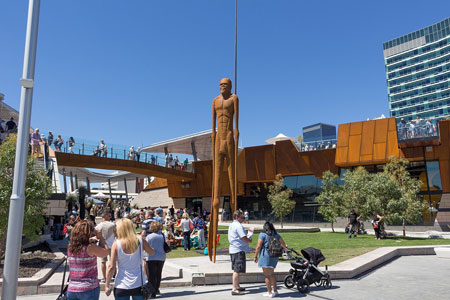
Shire of Mundaring
The Shire of Mundaring is a local government area in eastern metropolitan Perth, the capital of Western Australia. The Shire covers an area of 645 square kilometres (249 sq mi) and had a population of approximately 38,000 as at the 2016 Census. The Shire of Mundaring Council website - https://www.mundaring.wa.gov.au/ provides useful information for services (building and planning, cemetary, environemnt, fire and emergency, infrastructure and works, public health, ranger services and waste management. You may also have a say on the Shire of Mundaring Facebook page - https://www.facebook.com/ShireofMundaring/
Economic profile from https://economy.id.com.au/mundaring - GRP: $1.36 Billion, Population 39,139 (2018), Local jobs 10,650 (2018), Local businesses 2,985 (ABS 2018), Employed Residents (20,404 (NIEIR 2018).
Shire of Mundaring History
The Greenmount Road District was created on 17 April 1903. On 29 March 1934, it was renamed Mundaring. On 1 July 1961, it became the Shire of Mundaring after enactment of the Local Government Act 1960.
About the Croatian Language
Croatian is the standardized variety of the Serbo-Croatian language used by Croats, principally in Croatia, Bosnia and Herzegovina, the Serbian province of Vojvodina and other neighboring countries. Croatian is one of the official languages of the European Union, Bosnia and Herzegovina.
Standard Croatian is based on the most widespread dialect of Serbo-Croatian, Shtokavian, more specifically on Eastern Herzegovinian, which is also the basis of Standard Serbian, Bosnian, and Montenegrin.
Croatian, although technically a form of Serbo-Croatian, is sometimes considered a distinct language by itself. Purely linguistic considerations of languages based on mutual intelligibility (abstand languages) are frequently incompatible with political conceptions of language so that varieties that are mutually intelligible can not be considered separate languages. Differences between various standard forms of Serbo-Croatian are often exaggerated for political reasons. Most Croatian linguists regard Croatian as a separate language that is considered key to national identity. The issue is sensitive in Croatia as the notion of a separate language being the most important characteristic of a nation is widely accepted, stemming from the 19th-century history of Europe. The 1967 Declaration on the Status and Name of the Croatian Literary Language, in which a group of Croatian authors and linguists demanded greater autonomy for the Croatian language, is viewed in Croatia as a linguistic policy milestone that was also a general milestone in national politics. At the 50th anniversary of the Declaration, at the beginning of 2017, a two-day meeting of experts from Croatia, Bosnia-Herzegovina, Serbia and Montenegro was organized in Zagreb, at which the text of the Declaration on the Common Language of Croats, Bosniaks, Serbs and Montenegrins was drafted. The new Declaration has received more than ten thousand signatures. It states that in Croatia, Serbia, Bosnia-Herzegovina and Montenegro a common polycentric standard language is used, consisting of several standard varieties, such as German, English or Spanish. The aim of the new Declaration is to stimulate discussion on language without the nationalistic baggage and to counter nationalistic divisions.
The terms "Serbo-Croatian" or "Serbo-Croat" are still used as a cover term for all these forms by foreign scholars, even though the speakers themselves largely do not use it. Within ex-Yugoslavia, the term has largely been replaced by the ethnic terms Serbian, Croatian, and Bosnian.
Shire of Mundaring Croatian Translator Services
Croatian translator for certified translation services:
- Croatian driving license translation
- Croatian financial translation and bank statement translations
- Croatian birth certificate translation
- Croatian marriage certificate translation
- Croatian name-change certificate translation
- Croatian degree translation
- Croatian diploma translation
- Croatian school transcript translation
- Croatian passport translation
- Croatian police report translation
- Croatian police check translation
- Croatian personal letters and cards
- Croatian utility bill translations
- Croatian death certificate translation
Perth Translation provides fast and affordable Croatian translation services in the Shire of Mundaring for all types of personal documents by NAATI translators.
Croatian Document Translation
Standard Croatian is based on the Shtokavian dialect with ijekavian pronunciation, though Chakavian and Kajkavian dialects are spoken in coastal and northwestern regions respectively. Official documents uniformly use the literary standard regardless of region. Since Croatia's EU accession in 2013, document formats have increasingly aligned with European standards, though older documents from the Yugoslav era use different formatting and terminology that translators must recognise.
Croatian Document Types
Croatian civil documents include the rodni list (birth certificate), vjenčani list (marriage certificate), and vozačka dozvola (driving licence). Civil registry documents are issued by the matični ured (registry office) and may carry the heading Izvadak iz matice rođenih (extract from the birth register).
Where Croatian Is Official
Croatian is the official language of Croatia and one of the three official languages of Bosnia and Herzegovina. It became the 24th official language of the European Union upon Croatia's accession in 2013. Croatian documents now follow EU formatting standards for many document types, including driving licences and professional qualifications. It is also used by Croatian minority communities in Austria, Hungary, Italy, and Serbia.
Croatian uses the Latin alphabet exclusively, with the addition of the characters č, ć, dž, đ, š, and ž. These diacritical marks are essential for correct meaning and must be preserved in translations. Croatian also uses the digraphs lj and nj, each representing a single phoneme, which affects alphabetical ordering in official listings.
About Shire of Mundaring
The Shire of Mundaring covers approximately 644 square kilometres in the Darling Range east of Perth, with a population of around 39,000. It is predominantly a hills and semi-rural area characterised by jarrah forest, orchards, and hobby farms, with pockets of suburban development in Mundaring, Mundaring Weir, and Helena Valley.
Principal localities include Mundaring, Swan View, Midvale, Helena Valley, Darlington, Glen Forrest, Parkerville, and Stoneville, with the Mundaring town centre as the main commercial area.
The shire administration offices are on Nichol Street in Mundaring, adjacent to the Mundaring Arena sports facility. The Mundaring Library operates from the town centre, and the Bilgoman Aquatic Centre provides seasonal swimming facilities. Community halls serve smaller townships throughout the hills.
The Midland line extends to Midvale on the shire's western boundary, with bus services connecting to Mundaring town centre. Great Eastern Highway and Morrison Road are the primary access roads, and the area's hilly terrain makes private vehicle travel the dominant transport mode.
