
Perth Translation Services » Perth » Shire of Peppermint Grove Translation Services » Shire of Peppermint Grove Danish Translation Service
Shire of Peppermint Grove Danish Translation Services
 Get fast and professional translation services in Shire of Peppermint Grove. We have NAATI certified Danish translators providing translation of all types of documents. These include confidential legal, financial and migration document translations.
Legal Contract Translation Shire of Peppermint Grove
Medical Translation Shire of Peppermint Grove
Get A Quick Quote
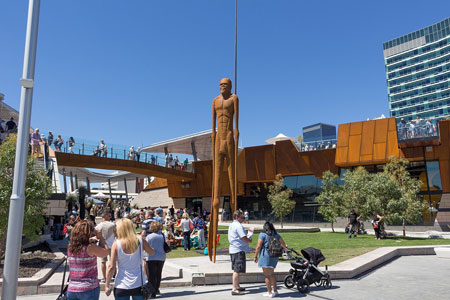
Shire of Peppermint Grove
The Shire of Peppermint Grove is a small local government area in western metropolitan Perth, the capital of Western Australia, between Mosman Park and Claremont about 12 km southwest of Perth's central business district. The Shire of Peppermint Grove, at 1.1 square kilometres (0.42 sq mi), is the smallest local government area in Australia.
Shire of Peppermint Grove History
From the Peppermint Grove Shire Council Website: https://www.peppermintgrove.wa.gov.au/
Peppermint Grove's long history goes back to 1835 when an innkeeper named John Butler was given a grant of land consisting of 150 acres along the north bank of the Swan River, the area now known as Peppermint Grove.
The land changed hands a number of times over the years, and in 1891, subdivision commenced when the land was purchased by a syndicate of George Leake, Charles Crossland and Alexander Forrest.
In its earlier days, Peppermint Grove was thickly wooded with tuarts, jarrahs, red gum, banksia, native pines, hollies and the beautiful peppermint trees which inspired its name. Brumbies roamed in the area, along with native cats, wallabies and an abundance of birds.
The subdivisions sold fast for between 7 and 12 pounds each (around $15 – $25) – an amount which is hard to comprehend today when vacant lots are selling for approximately up $3500 per square metre.
One of the earliest settlers was Edward Keane who later became Mayor of Perth. Another influential landowner was John Forrest, later to be Lord Forrest, Premier of Western Australia.
In 1895, after strong representations from residents, the area was gazetted a Road District, and the Peppermint Grove Road Board was established. Its main efforts were directed at providing essential roads and footpaths. The Road Board was the forerunner to the present Shire Council.
In those early days, the Premier of the day was at first reluctant to declare Peppermint Grove a Road District because of its small size, but the residents won through. Today, Peppermint Grove has the unique status of being the smallest municipality in Western Australia, covering just 1.5 square kilometres of land. From time to time, there have been calls for boundary change, but these have always been firmly rebuffed by residents.
The Shire has a population of over 1600, with a large proportion of residents who have long established links with the Shire going back over many generations. The Council today consists of seven Councillors, including a Shire President. There are five men and two women Councillors elected. The Shire’s Chief Executive Officer is readily accessible, and there is a marked absence of unnecessary bureaucracy. The Council recognises that a key objective of residents is to maintain the unique character of Peppermint Grove, and its policies and decisions are formulated to that end. Many of the Council’s strategies and initiatives are specifically directed at helping to preserve, maintain and enhance the ambience of Peppermint Grove.
Shire of Peppermint Grove Suburbs
Peppermint GroveAbout the Danish Language
Danish is the Germanic language spoken in Denmark, the Faroe Islands, and parts of Greenland and Germany (Southern Schleswig). Around 5.5 million people speak Danish. It is used as a second language in Greenland and the Faroe Islands. The Danish people, or Danes, call their language dansk.
Following the first Bible translation, the development of Danish as a written language, as a language of religion, administration, and public discourse accelerated. In the second half of the 17th century, grammarians elaborated grammars of Danish, first among them Rasmus Bartholin's 1657 Latin grammar De studio lingvæ danicæ; then Laurids Olufsen Kock's 1660 grammar of the Zealand dialect Introductio ad lingvam Danicam puta selandicam; and in 1685 the first Danish grammar written in Danish, Den Danske Sprog-Kunst ("The Art of the Danish Language") by Peder Syv. Major authors from this period are Thomas Kingo, poet and psalmist, and Leonora Christina Ulfeldt, whose novel Jammersminde (Remembered Woes) is considered a literary masterpiece by scholars. Orthography was still not standardized and the principles for doing so were vigorously discussed among Danish philologists. The grammar of Jens Pedersen Høysgaard was the first to give a detailed analysis of Danish phonology and prosody, including a description of the stød. In this period, scholars were also discussing whether it was best to "write as one speaks" or to "speak as one writes", including whether archaic grammatical forms that had fallen out of use in the vernacular, such as the plural form of verbs, should be conserved in writing (i.e. han er "he is" vs. de ere "they are").
The East Danish provinces were lost to Sweden after the Second Treaty of Brömsebro (1645) after which they were gradually Swedified; just as Norway was politically severed from Denmark, beginning also a gradual end of Danish influence on Norwegian (influence through the shared written standard language remained). With the introduction of absolutism in 1660, the Danish state was further integrated, and the language of the Danish chancellery, a Zealandic variety with German and French influence, became the de facto official standard language, especially in writing — this was the original so-called rigsdansk ("Danish of the Realm"). Also beginning in the mid-18th century, the skarre-R, the uvular R sound ([ʁ]), began spreading through Denmark, likely through influence from Parisian French and German. It affected all of the areas where Danish had been influential, including all of Denmark, Southern Sweden, and coastal southern Norway.
Shire of Peppermint Grove Danish Translator Services
Danish translator for certified translation services:
- Danish driving license translation
- Danish financial translation and bank statement translations
- Danish birth certificate translation
- Danish marriage certificate translation
- Danish name-change certificate translation
- Danish degree translation
- Danish diploma translation
- Danish school transcript translation
- Danish passport translation
- Danish police report translation
- Danish police check translation
- Danish personal letters and cards
- Danish utility bill translations
- Danish death certificate translation
Perth Translation provides fast and affordable Danish translation services in the Shire of Peppermint Grove for all types of personal documents by NAATI translators.
Danish Document Translation
Danish has significant dialectal variation between Jutlandic, Insular, and Bornholmian dialect groups, though standard Danish (Rigsdansk) based on Copenhagen speech is used in all official documentation. Documents from the Faroe Islands and Greenland, while under Danish sovereignty, are typically issued in Faroese or Greenlandic respectively, with Danish as a secondary language. These require different translation considerations than mainland Danish documents.
Danish Document Types
Danish civil documents include the fødselsattest (birth certificate) or fødsels- og dåbsattest (birth and baptism certificate, from church records pre-digitalisation), vielsesattest (marriage certificate), and kørekort (driving licence). The civil registration system is administered through the Folkeregistret (National Register).
Where Danish Is Official
Danish is the official language of Denmark, including the Faroe Islands and Greenland (where it is co-official with Faroese and Greenlandic respectively). It is also a recognised minority language in the Schleswig region of northern Germany. As an EU member state, Denmark issues many official documents in formats standardised across Europe, though the Danish CPR (Civil Registration) system produces documents with unique formatting conventions.
Danish uses the Latin alphabet plus three additional letters: æ, ø, and å, which appear at the end of the alphabet. These characters are essential for correct Danish and must be preserved in all translations. The letter å replaced the older spelling aa in 1948, though some proper nouns (notably the city of Aalborg) retain the older form. Danish naming conventions use patronymic-derived surnames (ending in -sen).
About Shire of Peppermint Grove
The Shire of Peppermint Grove is the smallest local government area in Western Australia, covering just 1.5 square kilometres between the Swan River and Stirling Highway. With a population of approximately 1,700, it is an exclusive, low-density residential enclave known for heritage homes and large riverfront properties.
The shire consists entirely of the single suburb of Peppermint Grove, bordered by Mosman Park, Cottesloe, and Claremont.
The shire offices and the Peppermint Grove Library are on Stirling Highway. Community facilities are modest given the small population, with the Peppermint Grove Tennis Club and local foreshore reserves serving as the primary recreational spaces.
Stirling Highway runs through the centre of the shire, providing direct road access to both Perth CBD and Fremantle. The nearest train stations are in neighbouring Cottesloe and Claremont on the Fremantle line, both within walking distance.
