
Perth Translation Services » Perth » City of Subiaco Translation Services » City of Subiaco Hungarian Translation Service
City of Subiaco Hungarian Translation Services
 Get fast and professional translation services in City of Subiaco. We have NAATI certified Hungarian translators providing translation of all types of documents. These include confidential legal, financial and migration document translations.
Legal Contract Translation City of Subiaco
Medical Translation City of Subiaco
Get A Quick Quote
City of Subiaco
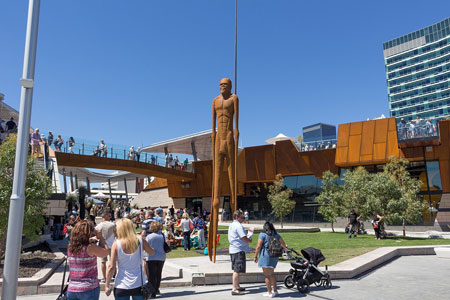
City of Subiaco is a local government area of Western Australia. It covers an area of approximately 7 km² in inner western metropolitan Perth, the capital of Western Australia and lies about 3 km west of the Perth CBD. Leafy Subiaco is a suburb centred on bustling Rokeby Road, with small boutiques and high-end cosmetics shops amid the stylish cafes, wine bars, trattorias and gastropubs. The landmark 1930s Regal Theatre hosts live music and comedy, while Subiaco Arts Centre is a modern space for exhibits, rock shows and edgy plays. Concerts are also held outside in the lush surrounding Theatre Gardens. The council's website: https://www.subiaco.wa.gov.au/
City of Subiaco History
The Subiaco Municipality was gazetted in 1896, and was proclaimed a city on 1 March 1952.
On 1 July 2016 the area south of Aberdare Road was transferred to the City of Perth.
City of Subiaco Suburbs
Crawley, Daglish, Jolimont, Shenton Park, SubiacoAbout the Hungarian Language
Hungarian is a Finno-Ugric language, which is a member of the Uralic language family. The group of Finno-Ugric languages also includes Finnish, Estonian, Lappic (Sámi) and some other languages spoken in the Russian Federation. Out of these it is Khanty and Mansi that are the most closely related to Hungarian. The Hungarian name for the language is magyar.
The traditional view holds that the Hungarian language diverged from its Ugric relatives in the first half of the 1st millennium BC, in western Siberia east of the southern Urals. The Hungarians gradually changed their lifestyle from being settled hunters to being nomadic pastoralists, probably as a result of early contacts with Iranian (Scythians and Sarmatians) or Turkic nomads. In Hungarian, Iranian loanwords date back to the time immediately following the breakup of Ugric and probably span well over a millennium. Among these include tehén ‘cow’ (cf. Avestan dhaénu); tíz ‘ten’ (cf. Avestan dasa); tej ‘milk’ (cf. Persian dáje ‘wet nurse’); and nád ‘reed’ (from late Middle Iranian; cf. Middle Persian nāy).
Archaeological evidence from present day southern Bashkortostan confirms the existence of Hungarian settlements between the Volga River and the Ural Mountains. The Onogurs (and Bulgars) later had a great influence on the language, especially between the 5th and 9th centuries. This layer of Turkic loans is large and varied (e.g. szó "word", from Turkic; and daru "crane", from the related Permic languages), and includes words borrowed from Oghur Turkic; e.g. borjú "calf" (cf. Chuvash păru, părăv vs. Turkish buzağı); dél ‘noon; south’ (cf. Chuvash tĕl vs. Turkish dial. düš). Many words related to agriculture, state administration and even family relationships show evidence of such backgrounds. Hungarian syntax and grammar were not influenced in a similarly dramatic way over these three centuries.
After the arrival of the Hungarians in the Carpathian Basin, the language came into contact with a variety of speech communities, among them Slavic, Turkic, and German. Turkic loans from this period come mainly from the Pechenegs and Cumanians, who settled in Hungary during the 12th and 13th centuries: e.g. koboz "cobza" (cf. Turkish kopuz ‘lute’); komondor "mop dog" (< *kumandur < Cuman). Hungarian borrowed many words from neighbouring Slavic languages: e.g. tégla ‘brick’; mák ‘poppy’; karácsony ‘Christmas’). These languages in turn borrowed words from Hungarian: e.g. Serbo-Croatian ašov from Hungarian ásó ‘spade’. About 1.6 percent of the Romanian lexicon is of Hungarian origin.
Recent studies support an origin of the Uralic languages, including early Hungarian, in eastern or central Siberia, somewhere between the Ob and Yenisei river or near the Sayan mountains in the Russian-Mongolian borderregion. A 2019 study based on genetics, archaeology and linguistics, found that early Uralic speakers arrived from the East, specific from eastern Siberia, to Europe. Today the language holds official status nationally in Hungary and regionally in Romania, Slovakia, Serbia, Austria and Slovenia.
City of Subiaco Hungarian Translator Services
Hungarian translator for certified translation services:
- Hungarian driving license translation
- Hungarian financial translation and bank statement translations
- Hungarian birth certificate translation
- Hungarian marriage certificate translation
- Hungarian name-change certificate translation
- Hungarian degree translation
- Hungarian diploma translation
- Hungarian school transcript translation
- Hungarian passport translation
- Hungarian police report translation
- Hungarian police check translation
- Hungarian personal letters and cards
- Hungarian utility bill translations
- Hungarian death certificate translation
Perth Translation provides fast and affordable Hungarian translation services in the City of Subiaco for all types of personal documents by NAATI translators.
Hungarian Document Translation
Hungarian is remarkably uniform across its speaker base, though differences exist between Hungary's standard dialect and Hungarian spoken in Transylvania (Romania), Vojvodina (Serbia), and Slovakia. These communities may use slightly different administrative vocabulary reflecting the legal systems of their respective countries. For document translation, the country of origin determines which terminological conventions apply.
Hungarian Document Types
Key Hungarian civil documents include szuletesi anyakonyvi kivonat (birth certificate), hazassagi anyakonyvi kivonat (marriage certificate), and halotti anyakonyvi kivonat (death certificate).
Where Hungarian Is Official
Hungarian is the official language of Hungary and a co-official language in parts of Romania, Serbia, Slovakia, and Slovenia where Hungarian minorities reside. It is also an official language of the European Union. Documents from each jurisdiction follow distinct formatting and certification conventions.
Hungarian uses the Latin alphabet with several diacritical marks including acute accents (e.g. a/a, e/e) and double acute accents unique to Hungarian (o/o, u/u). Accurate reproduction of these diacritics is essential as their omission changes word meaning.
About City of Subiaco
The City of Subiaco is one of Perth's smallest LGAs at just 7 square kilometres, located immediately west of the CBD with a population of approximately 20,000. Known for its village atmosphere and heritage streetscapes, it has experienced considerable urban renewal with higher-density residential development around the Subiaco train station precinct.
The LGA encompasses Subiaco, Daglish, Jolimont, and Shenton Park, with Rokeby Road and Hay Street forming the main retail and hospitality strip.
The Subiaco council chambers and administration offices are on Rokeby Road. The Subiaco Library is a well-used community facility, and Lords Recreation Centre provides sports and aquatic facilities. The Regal Theatre is a landmark cultural venue.
Subiaco and Daglish stations on the Fremantle line provide direct rail access to Perth CBD within minutes. Hay Street and Thomas Street are the main road corridors, and multiple bus routes connect through the area along Bagot Road and Roberts Road.
