
Perth Translation Services » Energy Mining Translation » Croatian Translator
Croatian Energy Mining Translation
 Whether you are extracting oil and gas, liquid or solid minerals, we have English <> Croatian translators with the background knowledge of your operating procedures and industry specific terminology.
Our belief in quality energy and mining Croatian translations means our translators make full effort to investigate the best Croatian translation for the document context and build upon past knowledge and experience from our existing clients.
Perth Croatian Translation Services
- Drilling programmes and expedition reports
- Employment Agreement
- Field development economics and budgeting documents
- Geophysical and geotechnical logs
- Health and Safety Documents
- Legal Agreements
- Operation and maintenance manuals
- Pipeline Inspection Reports
- Safety Signage and Guidelines
- Seismic data acquisition documents
- Technical and CAD drawings
- Tender Documentation
- Video and audio
- Well legislation, procedures and reports
Enquire with us today with your project requirement.
Upload your documents for translation
Professional Croatian Translator
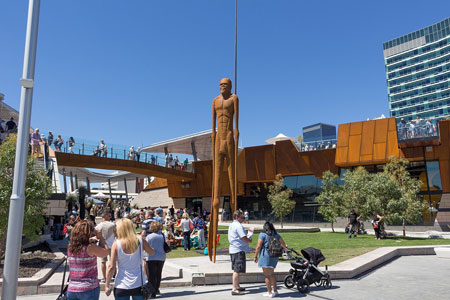
Perth Translation provides professional Croatian <> English translation services. You can use the form on this page to upload multiple files for a confirm quote and delivery time. Our Croatian translator is ready to assist with your translation project.

Energy Mining Subject Translations For All Major Languages
- Arabic energy mining translation
- Chinese energy mining translation
- Catalan energy mining translation
- Croatian energy mining translation
- Czech energy mining translation
- Estonian energy mining translation
- Dutch energy mining translation
- Finnish energy mining translation
- French energy mining translation
- German energy mining translation
- Greek energy mining translation
- Hindi energy mining translation
- Hungarian energy mining translation
- Indonesian energy mining translation
- Italian energy mining translation
- Japanese energy mining translation
- Korean energy mining translation
- Macedonian energy mining translation
- Malay energy mining translation
- Norwegian energy mining translation
- Persian energy mining translation
- Polish energy mining translation
- Portuguese energy mining translation
- Punjabi energy mining translation
- Romanian energy mining translation
- Russian energy mining translation
- Serbian energy mining translation
- Slovak energy mining translation
- Spanish energy mining translation
- Swedish energy mining translation
- Tagalog energy mining translation
- Thai energy mining translation
- Turkish energy mining translation
- Ukrainian energy mining translation
- Urdu energy mining translation
- Vietnamese energy mining translation
About the Croatian Language
Croatian is the standardized variety of the Serbo-Croatian language used by Croats, principally in Croatia, Bosnia and Herzegovina, the Serbian province of Vojvodina and other neighboring countries. Croatian is one of the official languages of the European Union, Bosnia and Herzegovina.
Standard Croatian is based on the most widespread dialect of Serbo-Croatian, Shtokavian, more specifically on Eastern Herzegovinian, which is also the basis of Standard Serbian, Bosnian, and Montenegrin.
Croatian, although technically a form of Serbo-Croatian, is sometimes considered a distinct language by itself. Purely linguistic considerations of languages based on mutual intelligibility (abstand languages) are frequently incompatible with political conceptions of language so that varieties that are mutually intelligible can not be considered separate languages. Differences between various standard forms of Serbo-Croatian are often exaggerated for political reasons. Most Croatian linguists regard Croatian as a separate language that is considered key to national identity. The issue is sensitive in Croatia as the notion of a separate language being the most important characteristic of a nation is widely accepted, stemming from the 19th-century history of Europe. The 1967 Declaration on the Status and Name of the Croatian Literary Language, in which a group of Croatian authors and linguists demanded greater autonomy for the Croatian language, is viewed in Croatia as a linguistic policy milestone that was also a general milestone in national politics. At the 50th anniversary of the Declaration, at the beginning of 2017, a two-day meeting of experts from Croatia, Bosnia-Herzegovina, Serbia and Montenegro was organized in Zagreb, at which the text of the Declaration on the Common Language of Croats, Bosniaks, Serbs and Montenegrins was drafted. The new Declaration has received more than ten thousand signatures. It states that in Croatia, Serbia, Bosnia-Herzegovina and Montenegro a common polycentric standard language is used, consisting of several standard varieties, such as German, English or Spanish. The aim of the new Declaration is to stimulate discussion on language without the nationalistic baggage and to counter nationalistic divisions.
The terms "Serbo-Croatian" or "Serbo-Croat" are still used as a cover term for all these forms by foreign scholars, even though the speakers themselves largely do not use it. Within ex-Yugoslavia, the term has largely been replaced by the ethnic terms Serbian, Croatian, and Bosnian.
Croatian Document Translation
Standard Croatian is based on the Shtokavian dialect with ijekavian pronunciation, though Chakavian and Kajkavian dialects are spoken in coastal and northwestern regions respectively. Official documents uniformly use the literary standard regardless of region. Since Croatia's EU accession in 2013, document formats have increasingly aligned with European standards, though older documents from the Yugoslav era use different formatting and terminology that translators must recognise.
Croatian Document Types
Croatian civil documents include the rodni list (birth certificate), vjenčani list (marriage certificate), and vozačka dozvola (driving licence). Civil registry documents are issued by the matični ured (registry office) and may carry the heading Izvadak iz matice rođenih (extract from the birth register).
Croatian is the official language of Croatia and one of the three official languages of Bosnia and Herzegovina. It became the 24th official language of the European Union upon Croatia's accession in 2013. Croatian documents now follow EU formatting standards for many document types, including driving licences and professional qualifications. It is also used by Croatian minority communities in Austria, Hungary, Italy, and Serbia.
Industry Requirements
The Department of Mines, Industry Regulation and Safety (DMIRS) regulates mining and petroleum operations in Western Australia. The National Offshore Petroleum Safety and Environmental Management Authority (NOPSEMA) oversees offshore safety, and the Australian Energy Regulator (AER) manages gas and electricity markets.
Key documents requiring translation include environmental impact assessments, mining lease agreements and joint venture contracts, safety data sheets (SDS) and hazardous materials documentation, geological survey reports, workforce safety induction materials in multiple languages, and regulatory compliance filings for international operations.
Contract documents and regulatory filings generally require certified translation for legal enforceability. Safety documentation under Work Health and Safety legislation must be accurately translated and accessible to all workers, and DMIRS may require certified translations of foreign-language technical reports.
Perth is the administrative capital of Australia's resources sector, with the CBD housing the headquarters of BHP, Rio Tinto, Woodside Energy, Fortescue, and South32. The city services the Pilbara iron ore operations, Goldfields mining, and North West Shelf gas projects, generating substantial demand for translation of contracts, safety materials, and technical documents involving Chinese, Japanese, Korean, and Indonesian partners.
